


Top 10 Progressive Cavity Pump Manufacturers Worldwide
Choosing among the top 10 progressive cavity pump manufacturers worldwide requires more than comparing product catalogues. A pump may appear efficient in a brochure, yet struggle with abrasive sludge, thick polymer, or temperature changes. Real performance depends on rotor geometry, stator material, sealing quality, speed control, and maintenance support.
René Moineau, the inventor of the progressive cavity pump, emphasized a practical design principle: “The pump must be adapted to the fluid, not the fluid to the pump.” That idea still guides responsible equipment selection. A wastewater plant may need gentle, low-pulsation transfer. A food processor may prioritize hygienic surfaces and cleanability. An oilfield operator may demand rugged construction, predictable torque, and rapid field service.
This overview examines ten influential manufacturers through an application-focused lens. It considers engineering experience, global service networks, documented reliability, customization, energy use, and lifecycle cost. Established names often provide stronger technical support, but reputation alone is not proof. Smaller specialists may offer faster customization or deeper knowledge in a narrow process.
Details matter.
A worn stator can increase energy consumption before failure becomes obvious. Incorrect elastomer selection can shorten service life within months. Poor installation can also make a dependable pump look defective. These limitations make any worldwide ranking imperfect. The list should therefore be treated as a practical starting point, not a final purchasing decision. Readers should verify flow data, viscosity, solids content, pressure requirements, certification needs, and local support before selecting a progressive cavity pump for critical service.
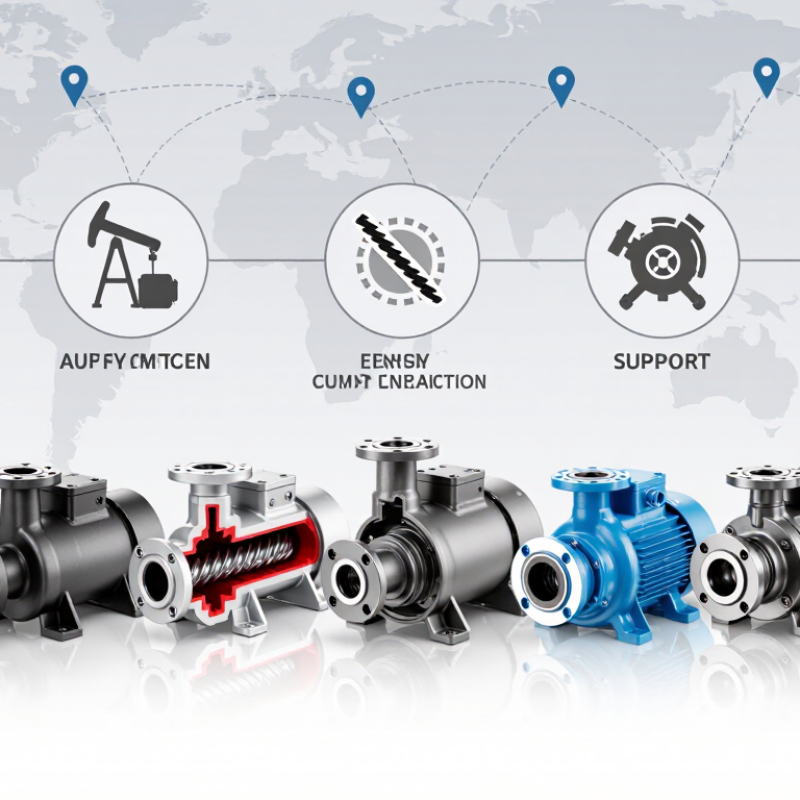
Progressive Cavity Pumps: Design, Operation, and Industrial Applications
Top 10 Progressive Cavity Pump Manufacturers Worldwide
Progressive Cavity Pumps: Design, Operation, and Industrial Applications
A progressive cavity pump moves fluid through sealed cavities formed between a helical rotor and resilient stator. Its positive-displacement action delivers steady flow, even when pressure changes. The rotor turns eccentrically inside the stator, creating pockets that travel from suction to discharge. This geometry handles viscous, abrasive, and solids-laden media with limited turbulence.
In field installations, operators select rotor speed according to viscosity, solids content, and required flow. Lower speed often reduces wear and protects shear-sensitive materials. A correctly sized inlet prevents starvation, while a pressure gauge reveals restrictions before damage develops. The stator needs compatible elastomer selection, especially with oils, solvents, heat, or changing pH. Dry running is dangerous. Without liquid lubrication, friction can rapidly damage the stator. Maintenance teams should inspect torque, leakage, vibration, and cavity pressure.
These pumps serve wastewater treatment, food processing, mineral handling, paper production, agriculture, and chemical manufacturing. They can dose sludge, transfer thick syrups, move dewatered cake, or feed mineral slurry. Hygienic designs require cleanable surfaces and controlled materials. Industrial versions may need abrasion-resistant components and remote monitoring. In practice, performance rarely matches a brochure perfectly. Temperature shifts can alter viscosity, while worn components may hide behind acceptable flow readings. I would leave room for testing. A short trial with the actual fluid can expose plugging, elastomer swelling, or unexpected power demand.
| No. | Configuration or Application Area | Operating Principle | Typical Flow Range | Typical Differential Pressure | Common Fluid or Service | Key Design or Selection Consideration |
|---|---|---|---|---|---|---|
| 1 | General industrial transfer | Single-helix metallic rotor turns inside a double-helix elastomeric or metallic stator, creating sealed progressing cavities. | 0.1–500 m³/h | Up to approximately 48 bar, depending on stages and model | Slurries, oils, chemicals, wastewater, and viscous liquids | Positive-displacement action provides steady flow and good suction capability at controlled speed. |
| 2 | Municipal and industrial wastewater | The cavities convey liquid and suspended solids with relatively low shear compared with many high-speed pump types. | 5–250 m³/h | Typically 6–24 bar | Primary sludge, activated sludge, thickened sludge, and dewatered sludge | Open-passage geometry, anti-clogging design, and suitable stator elastomer are important for solids handling. |
| 3 | Food and beverage processing | Low-speed positive displacement supports controlled metering and gentle transfer of shear-sensitive products. | 0.5–120 m³/h | Typically 6–18 bar | Fruit concentrate, dairy products, sauces, yeast, and confectionery masses | Use hygienic wetted parts, cleanable construction, food-compatible elastomers, and an appropriate surface finish. |
| 4 | Oil and gas production | Progressive cavities provide continuous multiphase transport and can accommodate liquids containing entrained gas. | 10–1,000 m³/day | Application-dependent; commonly 10–40 bar | Crude oil, produced water, emulsions, and multiphase well fluids | Material compatibility, elastomer swelling, gas fraction, sand content, and hazardous-area requirements must be evaluated. |
| 5 | Mining and mineral processing | Large internal passages and robust rotor-stator assemblies allow transport of abrasive or solids-bearing fluids. | 5–300 m³/h | Typically 6–30 bar | Mineral slurries, tailings, flotation concentrates, and process chemicals | Wear-resistant materials, replaceable components, and reduced operating speed help manage abrasion. |
| 6 | Chemical dosing and metering | Flow is approximately proportional to rotational speed when slip, pressure, and fluid properties remain controlled. | 0.01–20 m³/h | Typically 3–25 bar | Polymers, coagulants, latex, resins, and viscous additives | Variable-frequency drives, calibration, chemical resistance, and pulsation control support accurate dosing. |
| 7 | Paper, pulp, and fiber processing | Progressive cavities move high-viscosity liquids and fiber-containing mixtures with relatively stable volumetric delivery. | 5–250 m³/h | Typically 6–24 bar | Paper stock, coating compounds, black liquor, starch, and fiber suspensions | Rotor geometry, passage size, wear allowance, and resistance to fiber wrapping influence service life. |
| 8 | Construction and building materials | Positive displacement maintains controlled delivery of dense materials at low to moderate rotational speed. | 1–100 m³/h | Typically 6–40 bar | Grout, mortar, cement slurry, bentonite, and gypsum compounds | High-wear rotor and stator options, flushing arrangements, and resistance to abrasive solids are essential. |
| 9 | Biogas and anaerobic digestion | Low-shear conveying transfers digestate and organic slurries while accommodating variable solids concentration. | 5–200 m³/h | Typically 6–20 bar | Feedstock, digestate, sludge, manure, and organic suspensions | Gas-tight sealing, corrosion resistance, foreign-object tolerance, and easy maintenance are major considerations. |
| 10 | High-viscosity liquid service | Large, slowly advancing cavities deliver viscous media without requiring the high speed commonly used by centrifugal pumps. | 0.1–150 m³/h | Typically 6–36 bar | Bitumen, grease, molasses, paints, adhesives, and heavy oils | Heating jackets, inlet design, torque capacity, elastomer compatibility, and startup procedures affect reliability. |
| Engineering note: progressive cavity pumps are rotary positive-displacement pumps. Running them dry can rapidly damage the stator, and a pressure-relief or bypass arrangement is normally required because discharge flow can continue when the outlet is restricted. | ||||||
Related Posts
-

Mastering Dosing Pumps: A Step-by-Step Guide to Optimal Use and Maintenance
-
How to Choose the Best Diesel Transfer Pump for Your Needs?
-

Top Strategies for Enhancing Efficiency with Metering Pumps
-

Best Diesel Fuel Tank Buying Guide for Global Buyers?
-

Best Dosing Pump for Accurate Chemical Delivery?
-

Progressive Cavity Pumps Exposed: A Comprehensive Comparison of Efficiency and Cost-Effectiveness

