Top 10 Types of Diesel Tanks With Pumps for Buyers

Choosing a diesel tank with pump is not just about capacity. It affects refueling time, storage space, spill control, and daily workflow. A compact unit beside a service truck solves a different problem from a stationary tank serving a workshop. Details matter. Pump flow rate, hose reach, power source, tank material, and fittings all shape practical use. A tank that looks suitable in a product photo may be awkward beside a narrow equipment bay. That mismatch is easy to overlook.

This guide explores ten common tank types, including portable, stationary, skid-mounted, trailer-mounted, and vehicle-mounted options. Some designs prioritize mobility; others emphasize larger storage capacity or added protection. These categories can overlap, so compare the actual specifications rather than relying on the label alone. Consider where the tank will sit, how often it will move, what equipment it must refuel, and whether the pump’s power supply fits the site. Check the manufacturer’s instructions and applicable local requirements before selecting or installing a system. For example, a long hose may make access easier, but it can also be cumbersome in a confined work area. Higher capacity is useful only when the space and handling arrangements suit it. There is no universal best choice. Even a careful comparison can miss a small practical issue, so measure the installation area and think through a typical refueling task before buying.
Top 10 Types of Diesel Tanks With Pumps for Buyers

What Defines a Diesel Tank With an Integrated Pump

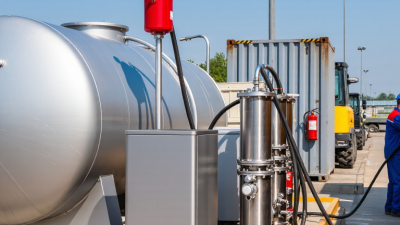
A diesel tank with an integrated pump is a coordinated dispensing unit, not merely a tank with a pump nearby. The pump is mounted on or built into the tank assembly, with compatible connections for drawing fuel and delivering it through a hose and nozzle. Depending on the design, the package may also include a filter, meter, shutoff, or lockable cabinet. These extras are not universal. Check the equipment list.

The U.S. Department of Energy’s Alternative Fuels Data Center lists conventional diesel at about 137,000 Btu per gallon. That energy content makes secure storage and controlled dispensing practical concerns, not just product features. Buyers should verify tank capacity, pump flow rate, power supply, hose reach, filtration, and whether the pump is rated for the intended duty cycle. A fast pump can save time, but only if the power source and hose arrangement suit the worksite. That distinction matters.

Look closely at how the pump is serviced and protected from weather, impact, and contamination. Confirm that fittings match the intended transfer setup and that the tank’s materials suit diesel storage. A neat, compact unit may still be awkward when its nozzle cannot reach the vehicle fill point. It is easy to overlook. Compare the complete package, not the word “integrated” alone.

How Diesel Tanks With Pumps Are Classified

Diesel tanks with pumps are commonly classified by mobility, installation, tank construction, and fuel-delivery equipment. Fixed tanks serve generators, workshops, or fleet yards, while skid-mounted units can be moved by forklift between work areas. Trailer-mounted tanks suit jobs that need fuel brought to equipment, and compact transportable tanks support smaller, occasional tasks. The categories overlap. A portable unit is not automatically easy to handle; fuel adds substantial weight, a detail buyers can overlook.

Construction offers another useful distinction. Steel tanks are often selected for demanding, long-term installations, while suitable polymer designs can reduce corrosion concerns and simplify handling. Single-wall and double-wall models differ in containment design, but the right choice depends on the site and operating plan. Pump systems may be manual or powered, with options such as meters, filters, and automatic shutoff features. Match pump flow to the equipment being refueled: a high-flow pump may be inconvenient for small machinery, while a slow one can delay fleet work. Check hose reach, power supply, and service access before choosing. Small details matter. A catalog description rarely shows how awkward a short hose feels beside a parked machine.

Top 10 Types by Design, Capacity, and Application

Top 10 Types of Diesel Tanks With Pumps for Buyers
Top 10 Types by Design, Capacity, and Application

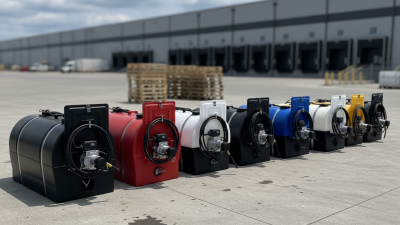
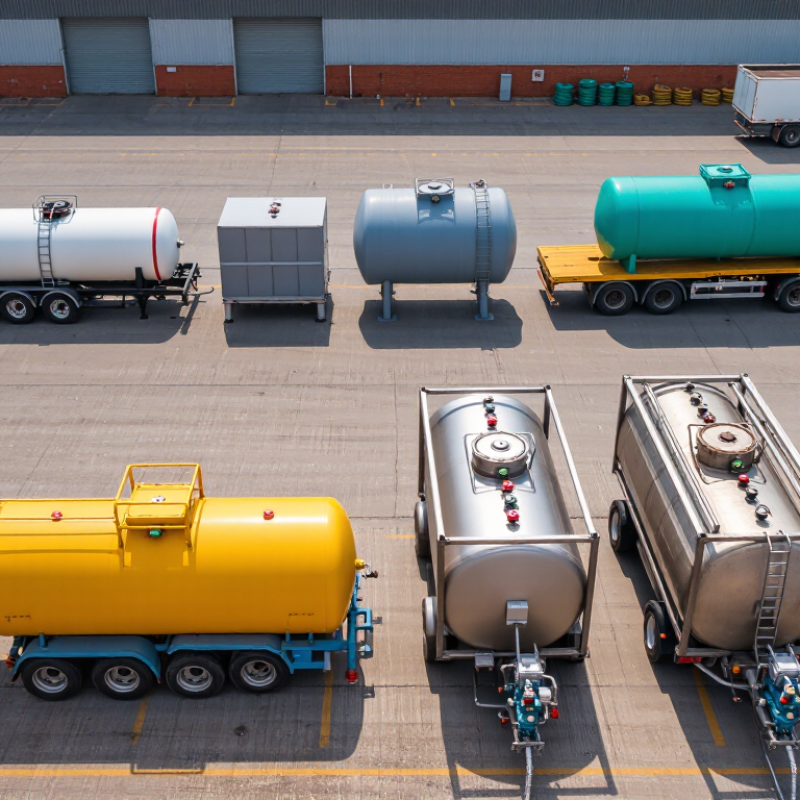
Diesel tanks with pumps vary by shape, mobility, and daily duty. Common options include portable transfer tanks, pickup-bed tanks, skid tanks, stationary bulk tanks, double-wall tanks, cube tanks, vertical cylindrical tanks, horizontal cylindrical tanks, trailer-mounted tanks, and generator day tanks. These categories can overlap: a cube tank, for example, may also be double-walled. Small portable units suit occasional equipment refueling, while bulk and stationary tanks support larger fleets or fixed sites. Trailer-mounted designs help serve work across changing locations.

Capacity should match real consumption, not simply available space. The U.S. Energy Information Administration’s Monthly Energy Review places distillate fuel near 5.8 million Btu per barrel, equivalent to about 138,000 Btu per gallon. That figure describes energy content, not equipment burn rate. Estimate required volume from the machine’s hourly fuel use, operating hours, and a practical reserve. A neat-looking oversized tank can still be the wrong choice if the pump or delivery rate cannot keep pace.

Tips: Check pump flow against the equipment’s refueling needs, and confirm hose reach at the actual parking position. Consider access for inspection, cleaning, and filter changes. Compare usable capacity rather than relying only on advertised volume. Supplier dimensions and specifications vary; verify them before planning installation. It is easy to overlook service access.

Top 10 Types of Diesel Tanks With Pumps

Typical capacity ranges by design and application

Capacity ranges are indicative examples, not universal specifications. Actual capacities depend on the product design, regulations, and intended use. Pump flow rate and features also vary by model.

Features That Affect Mobility, Storage, and Fuel Dispensing

Top 10 Types of Diesel Tanks With Pumps for Buyers

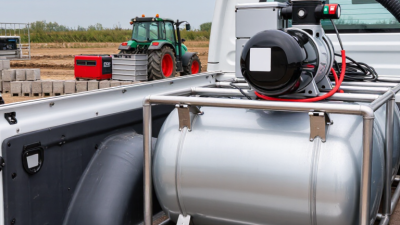
Diesel tanks with pumps range from compact pickup-bed units to skid-mounted, trailer, and stationary models. Their shape and fittings affect where they can go and how easily fuel reaches equipment. A slim tank may fit a service vehicle, while a larger rectangular tank can suit a fixed worksite. Capacity matters, but so do loaded weight, tie-down points, and access to the pump. A tank that looks convenient in a catalogue may be awkward beside a muddy field.

Tips: Check the pump’s flow rate, hose length, and nozzle storage before choosing. Make sure the unit can be secured on its intended vehicle or base. Leave practical space to reach the fill point and inspect connections.

Storage features matter, too. A lockable lid can help protect the pump and fittings from weather and casual access. Internal baffles can reduce fuel movement when a tank travels, though they do not replace careful driving or proper mounting. For dispensing, consider whether the pump’s power source matches the way the tank will be used. A longer hose reaches distant machinery, but it can be cumbersome to coil. There is no perfect layout; the best choice balances capacity, safe handling, and the daily distance between tank and equipment.

How Buyers Compare and Select the Right Diesel Tank

Buyers should compare diesel tanks by capacity, mobility, construction, and pump configuration—not price alone. A farm may need a skid tank that fits beside a shed, while a service fleet may benefit from a road-towable unit. Single-wall tanks can suit protected indoor locations; double-wall designs add a secondary barrier for outdoor storage. Check usable capacity, fill access, venting, and how easily the tank can be inspected. Small details matter.

Pump performance should match daily use. Compare flow rate, hose length, filtration, meter options, and power supply. A high-flow pump may shorten refueling queues, but it can be unnecessary for occasional equipment use. The U.S. Energy Information Administration lists diesel fuel at about 137,381 Btu per gallon. That figure helps explain why stored volume represents substantial energy, but it does not determine the right tank size. Estimate actual weekly demand and allow practical room for delivery timing. This estimate can still be wrong; seasonal use often changes.

Tips: Measure the installation space, including hose reach and vehicle turning room. Ask for documented tank capacity, pump flow, and material specifications. Inspect welds, seals, and access points before purchase. Compare the maintenance burden, too. A tank that looks ideal on paper may be awkward to fill on site.

Top 10 Types of Diesel Tanks With Pumps for Buyers - How Buyers Compare and Select the Right Diesel Tank

>
Tank type Indicative capacity Mobility and installation Common pump arrangement Typical use What buyers should compare
1. Single-wall stationary aboveground tank Often about 500–20,000+ gallons, depending on design Fixed installation on a prepared foundation; usually not intended to be moved when full Fixed electric pump or a separately mounted transfer pump, with meter and filtration as needed Regular on-site fuel storage for farms, workshops, and equipment yards Check site containment requirements, foundation, weather protection, access, and local fire and environmental rules.
2. Double-wall aboveground tank Commonly available from a few hundred to several thousand gallons Stationary; an outer wall provides secondary containment when the tank is designed for that purpose Integrated or separately installed electric pump; may include leak monitoring and dispensing equipment Sites needing built-in secondary containment or a compact storage-and-dispensing setup Confirm the outer-wall capacity, leak-detection method, usable storage volume, and applicable approvals.
3. Fuel cube tank Often roughly 50–500 gallons Compact, cube-shaped package; can be relocated when empty using suitable lifting points Frequently supplied with a pump, hose, nozzle, and lockable equipment compartment Construction sites, generators, and temporary or space-limited fueling locations Compare footprint, lifting provisions, pump power source, dispensing rate, and whether containment is included.
4. Skid-mounted diesel tank Commonly about 100–1,000 gallons, with larger options available Mounted on a steel skid for lifting or repositioning; typically used as a temporary or semi-permanent unit DC or AC transfer pump, often with hose and nozzle; configuration varies by application Remote work areas, backup-power installations, and sites that may change layout Check loaded weight, skid and lifting design, pump supply, and protection from weather or impact.
5. Portable fuel transfer tank Often around 30–100 gallons Portable unit intended for moving fuel in accordance with its design and applicable transport rules Usually a 12V DC pump or manual pump; may include a short hose and nozzle Small equipment refueling and limited-volume fuel transfer Verify that the tank is approved for the intended transport method, vehicle, fuel, and jurisdiction.
6. Truck-bed transfer tank Often about 30–150 gallons; vehicle payload and tank design limit usable capacity Secured in a pickup bed; designed for compatible vehicle mounting and use Commonly a 12V DC pump connected to the vehicle battery, with hose and dispensing nozzle Refueling equipment in the field from a compatible work vehicle Compare mounting, tank material, vehicle payload, electrical protection, and legal limits for carrying fuel.
7. Trailer-mounted fuel tank Ranges from small site units to several hundred gallons or more Mounted on a towable trailer; mobility depends on trailer rating, towing vehicle, and local road rules Typically an onboard DC pump, with optional meter, filtration, and hose reel Moving fuel between work sites or servicing equipment across a large property Check gross vehicle weight rating, braking and lighting equipment, tank securement, and transport compliance.
8. Mobile refueling service tank Varies by vehicle and tank design; commonly several hundred gallons Installed in a purpose-equipped service vehicle for dispensing at the point of use Vehicle-powered pump system, often with metering, filtration, hose reel, and dispensing controls Fleet or equipment refueling where vehicles cannot conveniently return to a fixed tank Assess vehicle payload, tank mounting, dispensing workflow, spill controls, and applicable mobile-fueling regulations.
9. Underground storage tank (UST) Often about 1,000–20,000 gallons, though design capacities vary widely Installed below ground as a permanent system; requires planned excavation and site-specific installation Pump may be aboveground or submersible, depending on system design; monitoring and dispensing components are separate considerations Sites where underground storage is appropriate and installation, monitoring, and maintenance can be supported Review permitting, corrosion protection, leak detection, installation, inspection, and ongoing compliance requirements.
10. Generator day tank Often a few gallons to several hundred gallons, sized to the generator system Installed near a generator; may be a standalone tank or part of a larger fuel supply system Often uses a transfer pump and level controls to supply the generator; pump arrangement depends on system layout Providing a local fuel supply for standby or continuous-duty generator equipment Match usable volume and replenishment rate to generator demand; coordinate controls, venting, and fire-safety design.

Capacity ranges are indicative examples, not guaranteed specifications. Actual availability and allowable use depend on tank design, material, installation, transport conditions, and local regulations. Confirm pump compatibility, required approvals, and site requirements before purchase.