How to Choose the Right Liquid Ring Vacuum Pump
Choosing the right liquid ring vacuum pump begins with understanding the process, not browsing a catalogue.
Dr. Karl Jousten, a respected vacuum-technology expert, explains, “Vacuum is not a state of nothingness; it is a state of reduced pressure.” That distinction matters in real plants. A pump may face humid air, solvent vapors, dust, or liquid carryover. Each condition changes the selection.
Look beyond the advertised vacuum level. Check the required capacity at operating pressure, gas temperature, seal-liquid temperature, and starting conditions. A pump rated for 100 mbar may perform poorly when the process demands stable suction at 300 mbar. Small details matter. Even water hardness can affect reliability.
A liquid ring vacuum pump often suits wet, dirty, or vapor-heavy applications because the sealing liquid absorbs heat and tolerates contamination. However, it is not automatically the best choice. The seal liquid may become polluted, and its temperature can reduce achievable vacuum. Energy consumption also deserves attention. A lower purchase price may hide higher operating costs.
Experienced engineers normally compare performance curves, materials, separator design, noise levels, maintenance access, and discharge handling. They also examine the complete system, including pipe diameter and pressure losses. This step is sometimes missed.
That is the imperfect part: field conditions rarely match laboratory data. Leave room for uncertainty. Confirm the process with measured data, not assumptions. The right liquid ring vacuum pump should deliver dependable performance, manageable maintenance, and acceptable lifecycle cost. In the following guide, each selection factor is examined through practical operating scenarios.
Understanding How Liquid Ring Vacuum Pumps Work
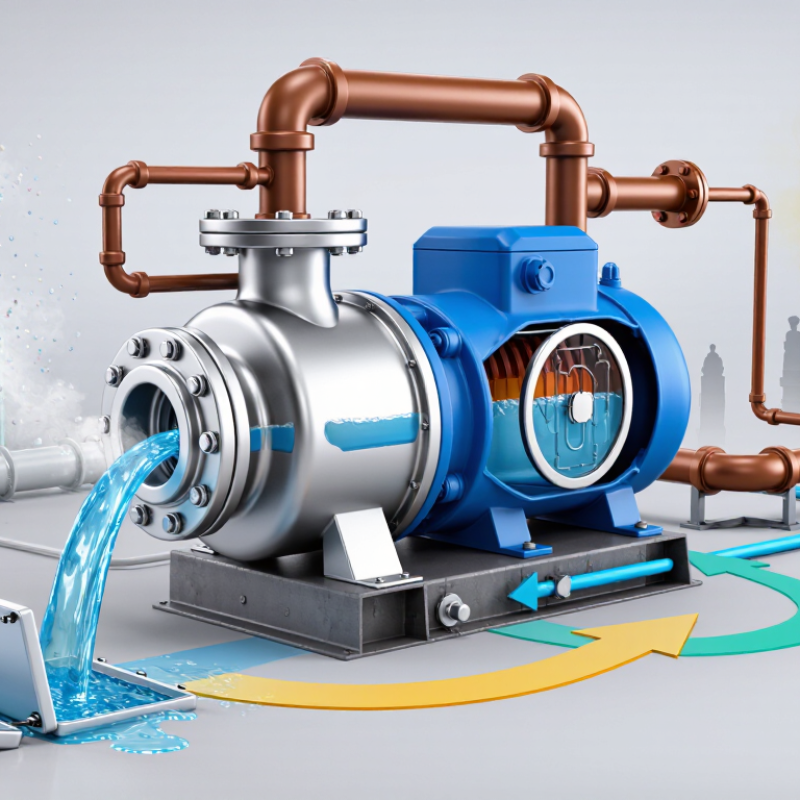
Choosing the right liquid ring vacuum pump starts with understanding its working principle. A liquid ring pump uses a rotating impeller inside an oval casing. As the impeller turns, centrifugal force forms a liquid ring around the casing wall. The offset ring creates changing pockets between the blades. Gas enters these pockets, becomes compressed, and exits through the discharge port.
It is a simple cycle. The circulating liquid also removes heat and seals internal clearances. Water is common, but it is not automatically suitable. Its vapor pressure can limit the achievable vacuum, especially as temperature rises. That detail is easy to overlook. A practical selection should consider gas load, target pressure, inlet temperature, and required flow under real operating conditions. Liquid compatibility matters too. Corrosive vapors may require a different sealing liquid or stronger construction materials.
If the process contains condensable vapor, liquid temperature deserves close attention. A cooler seal liquid can improve vacuum performance, but cooling equipment adds cost and maintenance. There is a tradeoff. Field checks matter too. Watch for cloudy liquid, unstable motor current, vibration, or gradual capacity loss. These signs may indicate contamination, cavitation, worn parts, or incorrect liquid flow. Theory helps, but operating records often reveal the real problem. I would not choose by catalog vacuum alone. A pump reaching deep vacuum in clean test conditions may struggle with warm, wet gas. That gap deserves honest review before installation.
How to Choose the Right Liquid Ring Vacuum Pump
Understanding how liquid ring vacuum pumps work starts with the sealing liquid. For water-sealed pumps, higher liquid temperature increases vapor pressure and can reduce the achievable vacuum level.
The values shown are saturation vapor pressures of water at sea-level reference conditions. When the operating liquid becomes warmer, the pump must overcome a higher vapor pressure, so selecting a cooler sealing liquid or a suitable liquid-ring configuration is important for deeper vacuum service.
Defining Vacuum Requirements and Operating Conditions
How to Choose the Right Liquid Ring Vacuum Pump
Defining Vacuum Requirements and Operating Conditions
Begin with the absolute pressure required at the process, not the advertised vacuum level. A reading of 100 mbar absolute differs greatly from 100 mbar vacuum gauge. Record the target pressure, evacuation time, gas flow, and expected leakage. ISO 21360 recommends evaluating vacuum-pump performance through defined inlet pressure and throughput conditions. That matters because capacity can fall sharply as pressure decreases.
Know the gas before sizing the pump. Is it air, saturated vapor, solvent vapor, or a dust-bearing mixture? A liquid ring pump can tolerate wet gases, but the seal liquid still sets the practical limit. Its vapor pressure must remain below the operating pressure. At 25°C, water has a vapor pressure near 32 mbar absolute, according to standard steam-table data. Colder seal liquid may improve vacuum performance. Warmer liquid can quietly remove your vacuum margin.
Measure operating conditions during real production. Include inlet temperature, ambient temperature, altitude, seal-liquid temperature, and daily duty cycles. The International Energy Agency has reported that electric motor systems consume about 53% of global electricity, so oversizing deserves scrutiny.
A pump running far below its design point may waste energy and create unstable control. I have seen specifications fail because the “normal” load was treated as the maximum load. That assumption needs challenging.
Use ISO-based test data, then compare required capacity at the actual pressure, not only at free air. Check noise, discharge temperature, liquid consumption, and available cooling water before approving the selection.
Matching Pump Materials to the Process Environment
How to Choose the Right Liquid Ring Vacuum Pump
Matching Pump Materials to the Process Environment
Material selection starts with the liquid circulating through the pump, not the vacuum level alone. Clean water may suit a cast iron casing, but chlorides can attack it quickly. Stainless steel offers better resistance in many wet processes. It is not automatically safe for every chemical.
Check the casing, impeller, shaft, seals, and gaskets separately. These parts may face different temperatures and concentrations. A solvent vapor can swell an elastomer before damaging the metal. Abrasive particles can also wear clearances, reducing efficiency and increasing power use. Small details matter.
Material charts provide useful guidance, but they can mislead when conditions change. A chemical that seems mild at room temperature may become aggressive near its boiling point. In practical pump selection, I would review the liquid composition, operating temperature, startup conditions, and possible contamination. Ask for corrosion data from a qualified engineer or materials specialist. Keep a sample analysis on record.
Do not overlook the service liquid. Clean, recycled, or contaminated liquid can create very different operating risks. Sometimes a more expensive alloy prevents repeated seal replacement. Sometimes it adds cost without improving service life. The decision deserves evidence, not assumptions.
Comparing Capacity, Efficiency, and Operating Costs
Choosing the right liquid ring vacuum pump starts with the process, not the catalog. Record the required vacuum level, gas temperature, vapor load, and target flow at operating conditions. A pump rated for peak capacity may waste power during normal production. Field checks often reveal that a small flow mismatch causes unstable suction and longer cycle times. Capacity matters. Bigger is not always better.
Compare performance curves at your real suction pressure, not only at standard test points. Efficiency depends on impeller design, seal-water temperature, and the amount of gas entering the system. Warm seal water can reduce vacuum performance because its vapor pressure rises. Keep that detail visible. It is easy to overlook during equipment selection. Measuring motor load during startup and steady operation can expose an oversized pump.
Operating cost includes more than electricity. Estimate power, seal-water use, cooling requirements, replacement parts, and labor over one year. A lower purchase price can become expensive when water consumption remains high. Choose controls that match demand, such as variable-speed operation or automatic capacity adjustment. However, controls also add maintenance points and training needs. I would review those risks before approving the final design. A simple log of vacuum level, water temperature, and motor current can support better decisions after installation.
Checking Installation, Maintenance, and Supplier Support
When choosing a liquid ring vacuum pump, inspect the installation before comparing technical specifications. Actual pipe layout often determines performance more than the catalogue rating. Use short, wide suction piping with gentle bends. Remove high points where condensate can collect. Check flange alignment, valve direction, foundation strength, and motor rotation before commissioning. Seal-water pressure and temperature also deserve attention. Hot water can reduce vacuum capacity and increase wear. Small details matter.
During operation, record vacuum level, seal-water flow, motor current, vibration, and discharge temperature. These readings create a useful baseline for future troubleshooting. Listen for rattling, irregular knocking, or sudden changes in sound. Cavitation may begin quietly, then damage internal surfaces. Inspect strainers, separators, seals, and clearances at scheduled intervals. Clean deposits before they become hard scale. Maintenance logs should include dates, readings, replaced parts, and unusual conditions. I have seen teams replace a pump when a blocked water line caused the real problem.
Supplier support should begin before delivery. Ask for performance data based on your actual gas composition, temperature, pressure, and operating cycle. A reliable supplier should review the piping plan and provide clear commissioning instructions. Confirm spare-part availability, technician response times, training options, and service documentation. Remote advice helps, but difficult installations may require an experienced technician onsite. Do not accept vague promises. Written support matters when production stops at night. Even careful teams miss things, so leave room for a second inspection.