Choosing the China Best Air Operated Diaphragm Pump Manufacturer? The answer requires more than comparing prices or reading polished catalogs. A dependable air operated diaphragm pump supplier should demonstrate practical experience with chemical transfer, wastewater handling, food processing, and other demanding applications. Ask for performance data, material options, and evidence of consistent production quality.
Look closely at the details. A serious manufacturer can explain how PTFE, Santoprene, or rubber diaphragms perform with specific fluids. It should also clarify flow rates, air consumption, maximum pressure, port sizes, and dry-running limits. Stainless steel and aluminum bodies serve different operating environments. A useful supplier will help match the pump to viscosity, temperature, particle size, and chemical compatibility. Trial testing matters.
Not every claim deserves full confidence. A polished website is not proof. Request factory photographs, inspection records, pressure-test results, and customer references where possible. Reliable manufacturers usually provide clear drawings, spare-parts guidance, installation support, and responsive after-sales service. Certifications can strengthen trust, but they should relate to the actual product and market.
The best choice may not be the cheapest one. It should deliver stable operation, predictable maintenance, and honest technical communication. Even experienced buyers can overlook pulsation, air quality, or seal wear. That is worth reviewing. By comparing engineering capability, production control, testing procedures, and service commitment, buyers can identify a Chinese manufacturer suited to long-term pumping requirements.
What defines a leading air operated diaphragm pump manufacturer in China? It starts with proven field experience, not attractive catalog figures. A capable manufacturer understands abrasive slurry, solvents, food liquids, and high-viscosity fluids. Technicians should verify diaphragm materials, valve-ball design, port size, and air pressure through real operating tests. A pump handling 60% solids needs different attention from one moving clean water.
Energy discipline also matters. The U.S. Department of Energy reports that compressed-air leaks can waste 20–30% of compressor output. Therefore, a responsible manufacturer measures air consumption at different flow rates. It should publish tested curves, cycle performance, and noise data. The ISO 8573 series also highlights the importance of compressed-air quality. Poor air filtration can shorten diaphragm life quickly. Small details matter.
Reliability requires traceability. Material certificates, batch records, pressure tests, and documented assembly procedures show professional control. ISO 9001-based quality systems can support this process, but certification alone proves little. Site audits still matter. Ask to see test benches, spare-parts controls, and failure-analysis records. No supplier gets every selection right. A thoughtful manufacturer admits limits and recommends a slower stroke, stronger elastomer, or larger pump when needed. That honesty often protects the buyer better than an oversized promise.
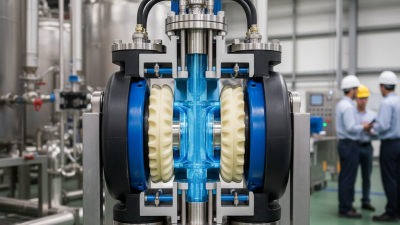
An air operated diaphragm pump uses compressed air to move liquid without a rotating impeller. Air enters one chamber and pushes a flexible diaphragm forward. At the same time, the opposite diaphragm pulls liquid into its chamber. Check valves control the inlet and outlet direction. The cycle then reverses continuously. Flow is naturally pulsating, not perfectly smooth. That matters in dosing and filling applications.
These pumps are used for wastewater, chemical transfer, paint circulation, food processing, and sludge handling. They can handle abrasive particles, high-viscosity liquids, and liquids containing suspended solids. They also run dry for limited periods when properly selected. No electrical motor sits directly beside the pumped liquid. This can simplify installation in wet or washdown areas. However, material compatibility remains critical. Diaphragms may require rubber, thermoplastic, or specialty materials, depending on temperature and chemical exposure.
Reliable performance depends on more than pump size. Air pressure, liquid viscosity, particle size, and discharge height must be checked together. A filter and regulator help protect the air system. A pulsation dampener can improve flow stability. I have seen oversized pumps waste compressed air and create unnecessary noise. Smaller pumps may struggle with long pipe runs. The selection process is not always perfect. Field testing, maintenance records, and honest operating data often reveal problems that a catalog cannot.
A dependable air operated diaphragm pump begins with controlled manufacturing standards, not attractive specifications. ISO 9001-based procedures can organize purchasing, machining, assembly, and corrective actions. Each pump should follow approved drawings, clear tolerances, and documented inspection points. Material selection must match the fluid, temperature, pressure, and cleaning method. Polypropylene resists many chemicals, while stainless steel supports demanding industrial service. PTFE diaphragms handle aggressive fluids, but they may need careful temperature control. Elastomer options should be checked against swelling, cracking, and fatigue risks. These decisions require practical application experience.
Tips: Request material certificates, batch traceability, and pressure-test records. Ask how incoming diaphragms are inspected. Good answers should include measurable criteria, not vague promises.
Quality control should continue after assembly. Inspectors can verify bolt torque, diaphragm position, air valve movement, and dimensional accuracy. Functional tests should examine flow stability, leakage, air consumption, and stall recovery. A short run test may reveal noise or uneven cycling.
For critical applications, endurance testing gives stronger evidence than a single factory check. However, no test plan is perfect. Field conditions can expose problems that controlled testing misses. Reliable manufacturers review returns, record failure patterns, and adjust production methods instead of hiding weak results. Clear reports, calibrated instruments, trained inspectors, and honest nonconformance records make supplier evaluation more dependable.
China Best Air Operated Diaphragm Pump Manufacturer?
Choosing a Chinese air operated double diaphragm pump manufacturer requires more than checking price. Examine design records, material traceability, test equipment, and production experience. The U.S. Department of Energy’s Improving Compressed Air System Performance handbook reports that leaks can waste 20–30% of compressor output. Therefore, compare air consumption at the required flow, not only the advertised maximum capacity.
Ask for performance curves showing flow, discharge pressure, air pressure, and fluid temperature. Request tests using realistic liquids, including abrasive slurries or solvents when relevant. A polished catalogue is not proof. Ask for serial-numbered test records. Check whether the factory verifies diaphragm life, valve-seat sealing, and deadhead operation. Standards such as ISO 9001 support process control, but certification alone cannot confirm pump performance. Visit the workshop if possible. Observe machining, assembly cleanliness, spare-part storage, and final inspection.
Product capability also depends on application knowledge. A suitable manufacturer should explain diaphragm materials, wetted-part alloys, connection standards, and pulsation-control options. The Hydraulic Institute’s pump-system guidance emphasizes matching equipment to the complete operating system, rather than selecting by nameplate capacity. That advice is easy to ignore. It should not be. Compare at least three suppliers with the same test conditions, warranty terms, response times, and lifecycle-cost assumptions. One overlooked issue remains common: a low purchase price can become expensive when air use, downtime, and replacement diaphragms are included.
This procurement scorecard assigns practical weights to the main capabilities that should be verified when evaluating an air operated diaphragm pump manufacturer. Performance data, factory testing, compliance documentation, materials, reliability, and after-sales support should all be assessed with traceable evidence rather than marketing claims.
Selecting the Right China-Based Manufacturer for Your Application
Choosing a China-based air operated diaphragm pump manufacturer requires more than comparing prices. Your application should guide every decision. Consider fluid viscosity, solid content, temperature, pressure, flow rate, and operating frequency. A pump handling abrasive slurry needs different diaphragm and valve materials than one moving clean chemicals. Photos are not enough.
Ask the manufacturer for performance curves, material certificates, dimensional drawings, and pressure-test records. Reliable suppliers can explain how each component matches your working conditions. They should also provide traceability for diaphragms, balls, seats, and body materials. During technical discussions, notice the detail. Vague answers may indicate limited engineering control. Clear answers usually come from documented experience.
Evaluate production capacity without assuming that a larger factory is always better. A focused manufacturer may offer faster engineering feedback and closer quality supervision. Request a sample pump or controlled factory test before placing a large order. Check packaging, spare-parts availability, installation guidance, and after-sales response times. A short video inspection can help, but an independent inspection offers stronger evidence. I have seen polished catalogs hide inconsistent machining, so verification matters. Even strong suppliers can make mistakes when specifications remain unclear. Put the final requirements in writing, including connection standards, testing methods, noise expectations, and acceptable tolerances. This small step prevents expensive misunderstandings.
| Selection Dimension | Typical Application Requirement | Practical Specification or Benchmark | What a Qualified China-Based Manufacturer Should Provide | Verification Method |
|---|---|---|---|---|
| Pump Operating Principle | Transfer of corrosive, abrasive, viscous, shear-sensitive, or solids-bearing liquids | Air-operated double-diaphragm construction with positive-displacement operation and self-priming capability | A clear explanation of air distribution, diaphragm movement, check-valve design, and dry-running behavior | Review sectional drawings, operating instructions, and performance curves |
| Flow Capacity | Batch transfer, chemical dosing support, wastewater handling, or process circulation | Common industrial pump sizes cover approximately 0.5 to 1,000 L/min, depending on model and operating conditions | Flow curves showing capacity at different air pressures, discharge heads, and liquid viscosities | Compare the duty point with a published performance curve |
| Discharge Pressure | Transfer through piping, filters, spray systems, or elevated storage tanks | Many industrial air-operated diaphragm pumps operate up to approximately 7 bar or 100 psi; the exact limit is model-dependent | A pressure rating supported by hydrostatic testing and clearly stated safety limits | Check the nameplate, technical datasheet, and pressure-test documentation |
| Compressed-Air Supply | Facilities with plant air systems operating at standard industrial pressure | Typical operating air pressure is approximately 2 to 7 bar; clean, dry, regulated air improves reliability | Recommended air pressure, air consumption data, filtration requirements, and connection size | Confirm the air system can meet both pressure and volume requirements |
| Wetted Materials | Acids, alkalis, solvents, oils, slurries, food liquids, or wastewater | Common choices include polypropylene, PVDF, aluminum, stainless steel, PTFE, EPDM, and NBR; compatibility depends on the fluid | A wetted-material selection guide and chemical compatibility information at the actual temperature and concentration | Check compatibility against recognized chemical-resistance data and request written confirmation |
| Diaphragm Material | Chemical resistance, abrasion resistance, oil exposure, or food-contact service | PTFE is widely used for aggressive chemicals; EPDM suits many water-based fluids; NBR is commonly used with oils | Diaphragm compound, reinforcement details, temperature range, and expected service-life factors | Review material certificates and application-specific temperature limits |
| Solid-Handling Capability | Sludge, wastewater, ceramic slurry, mining slurry, or liquids containing suspended particles | Solid-passage capability varies by pump size and valve design; it is commonly specified as a maximum particle diameter in millimeters | A stated solid-passage diameter, valve configuration, and guidance for abrasive-service operation | Match the largest particle size and concentration to the published limit |
| Liquid Viscosity | Adhesives, resins, oils, coatings, and other high-viscosity liquids | Capacity generally decreases as viscosity increases; actual performance must be evaluated at the operating temperature | Corrected flow data or test results for the stated viscosity, temperature, and suction conditions | Request a viscosity-specific performance calculation or test report |
| Temperature Range | Ambient transfer, heated process liquids, or chilled fluids | The allowable range is controlled by the body, diaphragm, seat, ball, and fluid combination; many standard elastomeric designs operate near -20°C to 80°C | A complete temperature limit for every wetted component rather than a single general value | Check the datasheet for the exact material combination and operating temperature |
| Self-Priming and Suction Lift | Drum emptying, tank transfer, mobile equipment, or intermittent operation | Air-operated diaphragm pumps are commonly self-priming; dry and wet suction-lift values vary by model and operating conditions | Separate dry and wet suction-lift ratings, including the effect of hose size and liquid viscosity | Compare the actual vertical lift and suction-line layout with test conditions |
| Noise and Workplace Requirements | Indoor production areas, laboratories, workshops, and regulated workplaces | Noise depends on air pressure, exhaust design, pulsation, and installation; an exhaust muffler can reduce perceived noise | Noise data where available, muffler specifications, exhaust connection details, and pulsation-control options | Request a measured noise value and define the measurement distance and conditions |
| Pulsation Control | Accurate filling, spray systems, filtration, metering support, or sensitive downstream equipment | Pulsation dampeners, flexible connections, and properly sized piping can reduce pressure fluctuation | Compatible dampener options, installation guidance, and recommended pressure settings | Review a piping schematic and confirm expected pressure fluctuation |
| Sanitary or Hygienic Design | Food, beverage, pharmaceutical, cosmetic, or biotechnology processes | Use smooth wetted surfaces, suitable elastomers, minimized dead zones, and an appropriate clean-in-place or disassembly procedure | Surface-finish information, hygienic connection options, material traceability, and applicable compliance documents | Review certificates, surface-finish records, and cleaning validation requirements |
| Quality Management | Projects requiring repeatable production and documented quality control | A documented quality system with incoming inspection, in-process checks, final testing, and traceable records | Quality certificates, inspection plans, calibration records, and serial-number traceability | Audit relevant records or request an independent factory inspection |
| Testing and Documentation | Industrial procurement, engineering approval, export projects, and replacement programs | Complete datasheet, dimensional drawing, spare-parts list, operating manual, and performance test information | Documents that identify materials, operating limits, maintenance intervals, and recommended spare parts | Use a document checklist before purchase approval |
| After-Sales Support | Continuous production where downtime creates significant cost | Availability of diaphragms, balls, seats, air valves, gaskets, and repair instructions | Defined warranty terms, spare-parts lead times, technical response procedures, and service training | Request a spare-parts quotation and written service-level commitments |
| Total Cost of Ownership | Comparison of multiple pump offers beyond initial purchase price | Evaluate purchase price, compressed-air consumption, diaphragm life, maintenance labor, spare parts, and downtime | A transparent cost model based on the actual duty cycle rather than unit price alone | Compare lifecycle cost over a defined operating period |
Note: Operating ranges are general industrial reference values. Final pump selection must be confirmed against the actual flow, pressure, air supply, chemical concentration, temperature, viscosity, solids content, installation layout, and applicable regulatory requirements.