2026 Top Vacuum Pump Models You Should Consider
In the world of industrial and scientific applications, vacuum pumps play a critical role. They help create the vacuum needed for various processes, including manufacturing and research. With numerous options available in 2026, choosing the right model can be overwhelming.
The top vacuum pump models this year offer improved efficiency and reliability. Some have advanced features that enhance performance. Others may lack durability or energy efficiency, prompting further consideration. Factors like operating environment and specific application needs matter a lot.
As we dive deeper into the 2026 selection, it's vital to weigh the pros and cons. Each vacuum pump has unique features that cater to different needs. Reflecting on these choices can lead to better decision-making for your projects.
2026 Vacuum Pump Market Overview and Growth Projections
The vacuum pump market is evolving rapidly. In 2026, several trends will shape its future. The demand for efficient and reliable vacuum pumps is increasing across various industries, including pharmaceuticals and manufacturing. Growth projections indicate a significant rise in the adoption of advanced technologies.
Innovation in vacuum pump designs is crucial. Many manufacturers are exploring more sustainable options. This leads to a potential shift in market dynamics. However, challenges remain, such as high production costs and the need for maintenance expertise. Not all businesses can adapt easily.
Moreover, the market faces competition from emerging technologies like alternative gas management systems. These solutions may offer benefits but also pose risks. Companies must weigh the options carefully. As organizations plan for 2026, focused strategies are essential for ongoing success in the vacuum pump industry.
Key Types of Vacuum Pumps: Mechanical, Turbomolecular, and Diaphragm
Vacuum pumps play an essential role in various industries. Choosing the right type is crucial for optimal performance. Mechanical, turbomolecular, and diaphragm pumps are among the most common types.
Mechanical vacuum pumps are known for their robustness. They are often used in general applications where moderate vacuum levels are needed. They can be noisy and require regular maintenance. This makes them a bit challenging for some users.
Turbomolecular pumps are designed for high vacuum applications. They function by rotating blades at high speeds, creating a vacuum. While they operate quietly and efficiently, they are more expensive. Users need to ensure proper installation and filtration to avoid issues.
Diaphragm pumps are ideal for corrosive or sensitive materials. They use a flexible diaphragm to create a vacuum. These pumps are compact and offer precise handling of gases and liquids. However, they may struggle with prolonged use and require frequent checks.
Tip: Always assess your specific application needs before choosing a pump. Not all models are suitable for all tasks, so it’s wise to research thoroughly.
Don’t ignore the importance of installation and maintenance. Regular checks can prevent costly repairs later on.
Tip: Keep an eye on performance metrics to understand how well your pump operates. Understanding these details can lead to better efficiency and longevity of your equipment.
Top Contenders for 2026: Performance Metrics and User Ratings
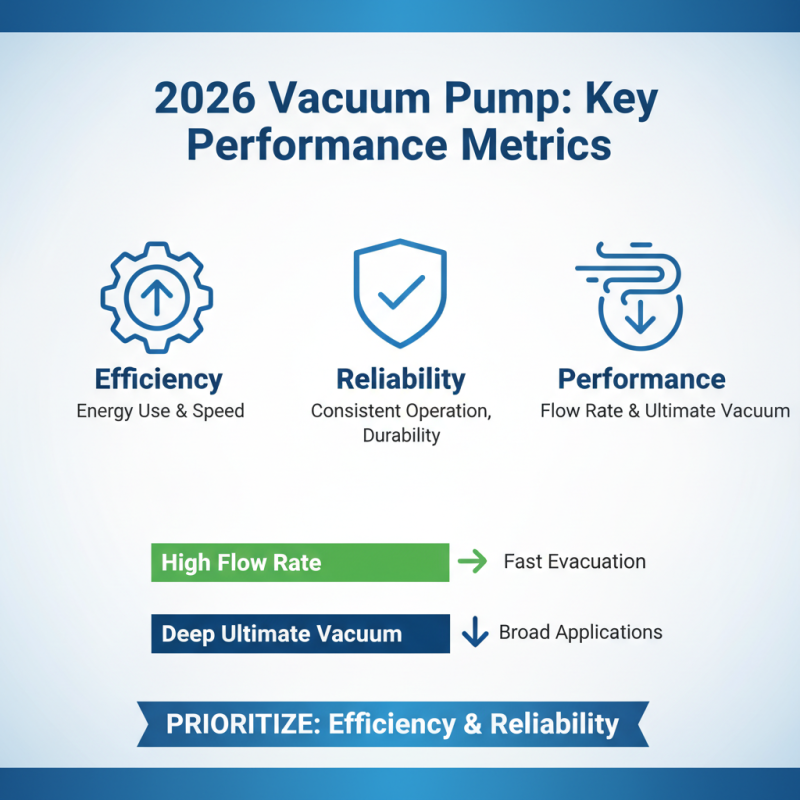
When considering vacuum pumps for 2026, performance metrics stand out as vital factors. Users often look for efficiency and reliability in their choices. A good vacuum pump will offer consistent performance, especially under heavy use. Metrics like flow rate and ultimate vacuum level are critical. They reveal how well a pump can handle diverse applications.
User ratings provide insight into real-world experiences. Many users prioritize durability and ease of maintenance. A pump that requires constant repairs can quickly become a burden. Positive feedback often highlights features like quiet operation and energy efficiency. However, some models perform well initially but deteriorate over time.
While many contenders may seem promising, not all fit every need. Some may excel in industrial settings but falter in smaller applications. Reflecting on specific requirements is essential. Users might enjoy advanced technology, but at what cost? Balancing performance with practicality is key for selecting the right model.
Factors Influencing Vacuum Pump Selection: Efficiency, Noise Levels, and Cost
Selecting the right vacuum pump can be daunting. There are multiple factors to consider, including efficiency, noise levels, and cost. Efficiency is key in determining how well a pump performs tasks such as extrapolating air or vapor. A highly efficient pump saves time and energy in the long run. However, efficiency should not come at the expense of practicality.
Noise levels can be crucial, especially in residential or sensitive work environments. A quiet model may be preferable to avoid disturbances. Still, some may sacrifice noise for performance. This balancing act can lead to regret later. A vacuum pump that is too noisy can disrupt workflow or even stir up complaints from neighbors.
Cost is another significant consideration. A high price tag does not always mean better quality. Sometimes, a mid-range option meets essential needs perfectly. However, the temptation to choose cheaper alternatives may lead to frequent repairs or replacements. Reflecting on these aspects can guide you toward the most suitable model, even if the decision feels overwhelming.
2026 Top Vacuum Pump Models Comparison
Future Trends in Vacuum Pump Technology: Automation and Eco-Friendliness
In the evolving landscape of vacuum pump technology, automation and eco-friendliness are emerging as crucial trends. According to a recent industry report, automated systems can enhance efficiency by up to 30%. These systems reduce the need for manual intervention, making operations smoother. The integration of smart sensors allows real-time monitoring. This approach aids in predictive maintenance, minimizing unexpected breakdowns.
Moreover, environmental concerns are influencing vacuum pump design. Manufacturers are increasingly adopting eco-friendly materials. Reports suggest that over 40% of companies are prioritizing sustainability in their operations. This shift not only addresses regulatory pressures but also meets consumer demand for greener products. However, the transition towards eco-friendly designs can be challenging. Not all businesses can easily afford the initial investment, and performance trade-offs are a concern.
Furthermore, energy efficiency is at the forefront of innovation. Many modern vacuum pumps are designed to use less power. Data show that optimized designs can cut energy use by 25%. However, existing systems may lag in comparison. Upgrading can be costly and logistically complex. Companies must weigh the benefits of new technology against the challenges of implementation. The balance between automation and sustainability remains a topic of debate in the industry.