Choosing the right fuel tank manufacturer requires more than comparing prices or browsing polished product pages. Global buyers must examine engineering depth, material traceability, production consistency, testing discipline, and after-sales support. A tank may look identical on a specification sheet, yet perform differently after months of vibration, temperature changes, and chemical exposure.
As automotive fuel-system engineer Andreas Weller once said, “A fuel tank is never just a container; it is a safety system.” That perspective should guide every supplier review. Strong manufacturers explain their resin or metal grades, welding or molding controls, leak-testing methods, and quality records. They also provide practical evidence, such as inspection reports, sample approvals, and documented production capacity.
Details matter.
A reliable supplier should answer difficult questions without vague promises. Can it maintain stable dimensions across high-volume orders? Does it manage tooling changes carefully? Can its engineers support regional installation requirements? These points often separate a dependable partner from a low-cost vendor.
This article introduces leading fuel tank manufacturers for global buyers. It considers product range, manufacturing capability, customization, certifications, delivery reliability, and technical communication. The comparison is useful, but it is not perfect. Supplier performance can change with ownership, raw materials, or factory expansion. Buyers should verify current data directly, inspect samples, and request recent quality evidence before signing a contract. A famous name helps. Careful validation matters more.
Fuel tanks serve different duties, and the correct type depends on pressure, temperature, mobility, and site risk. The IEA’s Oil 2024 report estimates global oil demand reached about 102 million barrels per day in 2023. That scale requires reliable storage across refineries, terminals, farms, mines, and emergency facilities.
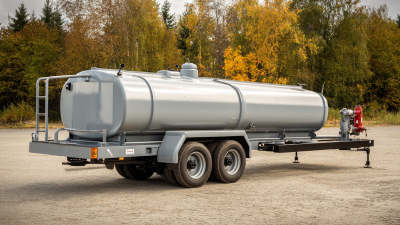
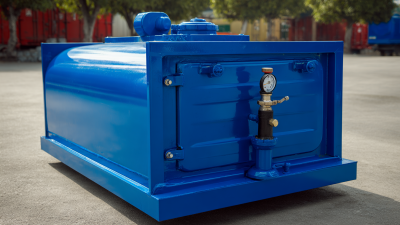
Aboveground atmospheric tanks suit diesel, gasoline, aviation fuel, and industrial oils. They usually support easier inspection and maintenance. API 650 practices are commonly referenced for welded steel tanks storing liquid products at near-atmospheric pressure. Double-wall tanks add secondary containment, especially near fuel stations and environmentally sensitive areas. Underground tanks save surface space, but corrosion monitoring and leak detection become more demanding. A common mistake is treating underground storage as automatically safer. It is not always.
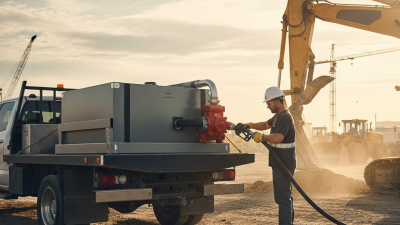
Pressurized tanks handle liquefied gases and fuels requiring controlled vapor conditions. Cryogenic tanks use advanced insulation for liquefied natural gas and other low-temperature products. Portable tanks support construction sites, agricultural equipment, disaster-response fleets, and temporary power systems. Marine tanks must also consider vessel motion, ventilation, and fuel compatibility. The IMO’s Fourth GHG Study estimated shipping produced 2.89% of global anthropogenic carbon dioxide emissions in 2018, increasing pressure for cleaner marine-fuel systems. That matters. Buyers should compare material certificates, weld quality, testing records, coating systems, and local code compliance, not only capacity and price. Real installations are messier than catalog tables.
When evaluating global fuel tank manufacturers, start with application evidence, not polished catalogs. Ask for projects matching your fuel type, operating temperature, vibration, and installation space. A tank for a mobile generator faces different stresses than one used in a marine or industrial system. Request drawings with dimensions, inlet locations, drain points, vent design, and mounting details. Small omissions become expensive during installation.
Material quality deserves careful verification. A reliable manufacturer should provide material certificates, weld procedures, inspection records, and traceability for each production batch. Check wall thickness, coating adhesion, corrosion resistance, and pressure or leak-test methods. Factory experience matters here. Inspectors should examine weld seams, fittings, and internal cleanliness rather than only reviewing documents. Ask whether testing follows recognized standards and destination-market requirements. Evidence matters more than promises.
Supply reliability also includes packaging, shipping protection, spare fittings, technical communication, and after-sales response. Confirm realistic lead times and how design changes are controlled. No manufacturer is perfect. A supplier that admits limitations may be safer than one claiming universal capability. I would request a sample inspection before approving a large order. It may feel slow. It can reveal poor labeling, awkward access, or a drain placed too close to the frame. Those details often decide whether a tank performs reliably after installation.
Material selection is a fundamental criterion when evaluating fuel tank manufacturers. The chart compares commonly used tank materials by approximate density at room temperature. Lower-density materials can reduce vehicle weight, while steel generally provides high rigidity and established durability. Buyers should also verify fuel compatibility, corrosion resistance, weld quality, leak testing, and compliance with applicable regional standards.
Top Fuel Tank Manufacturers for Global Buyers?
Leading Fuel Tank Manufacturers by Region and Product Strength
Regional strength matters more than a simple global ranking. According to Grand View Research, the automotive fuel tank market is expected to expand steadily through 2030, driven by vehicle production and stricter emission controls. North American manufacturers often excel in heavy-duty steel tanks, larger commercial volumes, and crash-resistant designs. Their products suit trucks, buses, and off-road equipment operating under demanding loads.
European suppliers commonly focus on lightweight polymer tanks, vapor control, and precise packaging. These capabilities support stricter vehicle efficiency targets and limited engine-bay space. Reports from the European Automobile Manufacturers’ Association show continued pressure to reduce vehicle weight and emissions. That pressure shapes tank design. It also raises development costs.
Asian manufacturers usually offer strong production scale, molded plastic expertise, and competitive pricing. MarketsandMarkets identifies Asia-Pacific as a major growth region for automotive components, supported by expanding vehicle output. Buyers should still inspect weld quality, wall thickness, permeability results, and traceability records. A low quoted price can hide expensive validation work.
Product strength should match the application. Steel tanks remain practical for rugged fleets and simple repairs. Plastic tanks reduce weight and resist corrosion, but they need careful chemical compatibility testing. Alternative-fuel tanks require different pressure, liner, and safety evaluations. Certification against applicable regional requirements must be verified directly. I would not trust a catalog claim alone. Factory audits, sample testing, and service records reveal more than polished brochures.
Selecting top fuel tank manufacturers requires more than comparing prices. Manufacturing standards reveal how a supplier controls risk. ISO 9001 certification supports documented processes, corrective actions, and traceability. The ISO Survey 2023 recorded more than 1.2 million ISO 9001 certificates worldwide. Certification helps, but it does not guarantee every weld is perfect.
Material selection should match fuel type, temperature, pressure, and installation conditions. Carbon steel offers strength and repairability. Stainless steel resists corrosion but usually costs more. Reinforced polymers can reduce weight, yet permeability and impact resistance require careful testing. The World Steel Association reported 1.89 billion tonnes of crude steel production in 2023. That scale makes material consistency important, especially for large purchasing programs.
Tips: Request heat numbers, mill certificates, welding procedures, and coating records. Ask for pressure-test results from the actual production batch. Inspect welds visually and through suitable non-destructive testing. Check calibration dates on gauges and test equipment. A factory tour is useful, but one clean showroom proves little.
Quality control should continue after fabrication. Manufacturers need incoming-material checks, dimensional inspections, leak testing, and final documentation. Independent inspectors can verify sampling and witness critical tests. However, sampling may miss a recurring defect. Buyers should review failure trends, not only pass rates. Small details matter: uneven coating near a nozzle, unclear labels, or missing torque records can create later maintenance problems. Some procurement teams still overvalue certificates and undervalue production evidence. That deserves reconsideration.
| Evaluation Dimension | Industry-Recognized Requirement or Benchmark | Common Materials and Manufacturing Methods | Typical Quality-Control Practices | Recommended Buyer Evidence |
|---|---|---|---|---|
| Quality management system | ISO 9001 provides a globally recognized framework for documented processes, corrective action, risk-based thinking, and continual improvement. Automotive programs may additionally use IATF 16949 requirements. | Controlled production procedures, approved work instructions, traceable inspection records, and calibrated measuring equipment. | Internal audits, supplier evaluations, nonconformance reports, corrective-action systems, and management reviews. | Current certificates, certificate scope, issuing-body details, audit status, and sample inspection records. |
| Vehicle fuel-system compliance | Applicable requirements may include UN ECE Regulation No. 34 for protection against fire risks and FMVSS No. 301 for fuel-system integrity, depending on the destination market and vehicle category. | Designs generally include protected filler connections, rollover protection, secure mounting points, and controlled vapor or liquid leakage paths. | Design validation, leakage testing, impact-related evaluation, rollover-valve checks, and verification of mounting strength. | Applicable-market compliance statement, test reports, engineering drawings, and records identifying the tested configuration. |
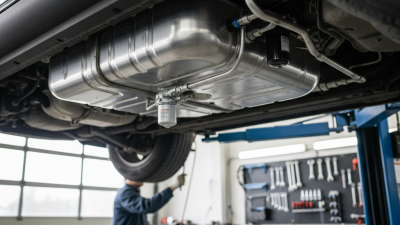
| Steel fuel tanks | Steel tanks are widely used where high impact resistance, rigidity, and cost efficiency are important. Material grade and thickness must be selected according to the application and corrosion environment. | Low-carbon or coated steel sheet; stamping, deep drawing, bending, resistance welding, laser welding, and controlled seam finishing. | Sheet-thickness checks, weld inspection, dimensional measurement, pressure or leak testing, coating-thickness checks, and corrosion testing where specified. | Material certificates, weld procedure records, coating specifications, corrosion-test results, and batch-level traceability. |
| Aluminum fuel tanks | Aluminum is selected for low mass and natural corrosion resistance. Alloy selection, weldability, and compatibility with fuel and fittings must be validated for the intended service. | Aluminum sheet or extruded sections; forming, TIG or MIG welding, machining, and surface finishing. | Weld visual inspection, dimensional checks, leak testing, alloy verification, weld-quality evaluation, and surface inspection. | Alloy and temper certificates, welding qualifications, leak-test records, and evidence of fuel-compatibility validation. |
| High-density polyethylene tanks | HDPE tanks are commonly produced as lightweight, corrosion-resistant rotational-molded components. Resin selection and multilayer construction may be required for fuel permeation control. | High-density polyethylene resin, often with barrier layers or conductive features where required; rotational molding, trimming, welding, and insert assembly. | Resin verification, wall-thickness mapping, weld and insert inspection, dimensional checks, pressure or vacuum testing, and permeation testing. | Resin batch records, layer-structure details, permeation results, dimensional reports, and validation for the specified fuel blend. |
| Weld and joint integrity | Fuel-containing joints must maintain structural integrity and prevent liquid or vapor leakage throughout the defined operating range. | Resistance welding, laser welding, TIG/MIG welding, hot-plate welding, vibration welding, or compatible mechanical sealing systems. | Weld-parameter monitoring, first-piece approval, visual inspection, destructive sample testing, helium or air-pressure leak testing, and process capability review. | Welding procedure specifications, operator qualifications, leak-test limits, equipment calibration records, and rejection-rate data. |
| Leakage and pressure testing | Testing methods and acceptance limits must be defined by the product specification, applicable vehicle regulations, and the intended fuel system. | Air-pressure, vacuum-decay, hydrostatic, tracer-gas, or automated differential-pressure methods may be used according to material and design. | 100% end-of-line leak testing for critical assemblies, automatic result logging, test-equipment calibration, and containment of failed units. | Approved test procedure, acceptance threshold, test-frequency plan, calibration certificates, and anonymized production test records. |
| Fuel permeation and emissions | Permeation performance is important for gasoline, ethanol blends, diesel, and other fuels. Requirements vary by market, fuel type, and vehicle application. | Barrier-layer plastics, fluorinated or treated polymer systems, metallic construction, and sealed fittings may be used to reduce vapor loss. | Fuel-specific conditioning, temperature-controlled permeation testing, mass-loss measurement, and periodic validation of material changes. | Test fuel composition, conditioning period, temperature profile, measured permeation rate, and laboratory accreditation or competence records. |
| Dimensional accuracy and fit | Tank geometry must meet drawing tolerances for vehicle packaging, clearance, filler alignment, pump-module installation, and mounting interfaces. | Formed metal, molded polymer, machined fittings, welded brackets, and integrated baffles or internal support features. | Coordinate-measuring-machine inspection, gauges, fixture verification, first-article inspection, and statistical process monitoring. | Approved drawings, tolerance stack-up analysis, inspection plans, first-article reports, and capability indices for critical dimensions. |
| Corrosion and chemical compatibility | Materials, coatings, seals, hoses, and fittings should be compatible with the specified fuel, additives, road salt, moisture, and temperature range. | Coated steel, aluminum alloys, HDPE, fluoropolymer or elastomer seals, and fuel-resistant connection components. | Salt-spray or cyclic-corrosion testing where applicable, immersion testing, seal swelling checks, mass-change measurement, and visual examination. | Material compatibility matrix, coating data, fuel-blend test results, seal specifications, and defined service-life assumptions. |
| Traceability and change control | Critical components and material batches should be traceable from incoming inspection through production, testing, release, and shipment. | Lot-coded raw materials, serialized assemblies, controlled drawings, revision-managed bills of material, and documented approved suppliers. | Barcode or serial tracking, retained samples, engineering-change approval, process revalidation, and documented deviation control. | Traceability sample, change-notification procedure, retention policy, deviation records, and recall or containment process. |
| Final inspection and shipment protection | Released tanks should be clean, dry, correctly labeled, sealed against contamination, and protected from deformation or impact during transport. | Protective caps, corrosion inhibitors where suitable, custom fixtures, moisture barriers, molded supports, and export-grade packaging. | Final visual inspection, label verification, quantity checks, packaging audits, photo records, and review of shipping damage complaints. | Packing specification, final inspection checklist, certificate of conformity, shipment photographs, and documented handling instructions. |
Note: Applicable standards, tests, materials, and acceptance limits depend on the vehicle type, fuel composition, destination market, tank capacity, and final installation requirements.
Top Fuel Tank Manufacturers for Global Buyers?
How International Buyers Can Select and Source the Right Supplier
Choosing a fuel tank supplier requires more than comparing unit prices. In supplier reviews, I have found that material compatibility often decides long-term performance. Confirm whether the tank suits diesel, gasoline, aviation fuel, or another approved application. Ask for material certificates, weld inspection records, and pressure or leak-test results. A polished brochure is not evidence.
Review the supplier’s production experience with your required tank size and installation method. Request drawings showing fittings, vents, supports, coatings, and access points. Check whether the design matches your local transport and workplace requirements. Certification must be verifiable and relevant to the destination market. Do not accept a copied document without checking its scope and validity.
Inspect quality controls before signing a purchase agreement. Clear inspection stages can prevent costly surprises. Discuss sampling, factory acceptance testing, packaging, spare parts, and technical support. Export experience also matters, especially when tanks need protective crating and careful port handling. Delivery promises may sound precise, but production capacity can change. Include realistic tolerances and written remedies for delays or defects. I still see buyers focus too heavily on price. That is understandable, but incomplete. A slightly cheaper tank can create higher installation, maintenance, or compliance costs later. Ask practical questions, record every answer, and compare suppliers using the same technical checklist.