Top 5 Tips for Choosing the Right Industrial PC for Your Needs
Choosing the right Industrial PC is a vital decision for any business. An Industrial PC must meet specific operational needs, ensuring reliability and efficiency. It serves as the backbone of various industrial applications, from data processing to machine control.
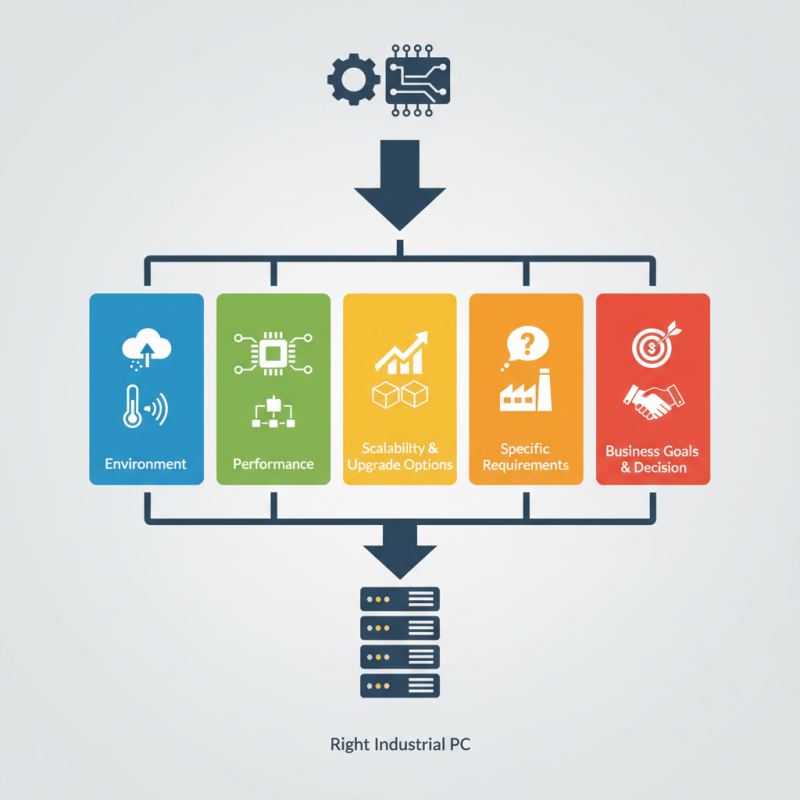
When selecting an Industrial PC, consider the environment it will operate in. Factors like temperature, dust, and vibration can significantly affect performance. Each Industrial PC is designed for unique challenges. Thus, understanding your specific requirements is crucial.
Many businesses may overlook the importance of scalability and upgrade options. A well-chosen Industrial PC should adapt to future technological advancements. Simplifying this choice can be overwhelming. However, with informed guidance, you can make a decision that supports your business goals effectively.
Understanding Your Industrial Environment and Application Requirements
Understanding your industrial environment and application requirements is critical when selecting an industrial PC. The right choice will maximize efficiency and reduce downtime. A well-designed study by the Industrial Internet Consortium indicates that 70% of organizations report improved operational efficiency by selecting the correct hardware. The specific conditions of your work site, including temperature fluctuations and dust exposure, will heavily influence your decision.
Consider your application needs. Will the PC run complex data analytics or simple monitoring tasks? A report from Grand View Research highlights that the demand for edge computing in industrial sectors is projected to grow by over 25% annually. Therefore, your industrial PC must handle the necessary workloads. Evaluating the processor speed and memory is essential.
Tip: Check for ruggedness against environmental factors. Not all PCs are built for extreme conditions. Look at their IP ratings, which indicate dust and moisture resistance. Another crucial aspect is expandability; ensure the system can support future upgrades. An adaptable industrial PC can save costs in the long run. Also, think about support and service offerings from manufacturers. Reliable after-sales support can significantly ease operational challenges.
Top 5 Considerations for Choosing the Right Industrial PC
Evaluating Key Performance Specifications for Industrial PCs
When selecting an industrial PC, understanding the key performance specifications is crucial. These specifications can significantly impact operational efficiency and system reliability. According to research from industry experts, performance metrics such as CPU speed, RAM, and storage capacity are essential in achieving optimal performance. For instance, a PC with at least 4GB of RAM tends to perform better in multi-tasking environments.
Temperature tolerance is another vital specification to consider. Industrial PCs often operate in harsh environments. Temperature ranges of -20 to 70 degrees Celsius are common in many applications. A unit that cannot withstand these conditions may fail, leading to downtime. A 2021 report noted that systems failing due to temperature extremes cost companies significantly in lost productivity.
Power consumption has become another important metric in recent analyses. Efficient energy use can lead to long-term savings. Systems with a power rating below 200 watts are ideal for many industrial applications. However, lower power consumption might correlate with lower performance for some tasks. Optimizing power without compromising performance remains an ongoing challenge for many organizations. Balancing these specifications requires careful evaluation of your unique operational needs.
Assessing Durability and Reliability Standards in Harsh Conditions
When selecting an industrial PC, durability is crucial. These devices often operate in harsh environments, facing extreme temperatures, humidity, and dust. Finding a system with robust build quality can prevent costly downtime. Look for an IP rating to quantify dust and moisture resistance. An IP67 rating ensures protection against both dust and immersion in water, ideal for manufacturing settings.
Reliability standards are equally essential. An industrial PC should undergo rigorous testing, including vibration, shock, and thermal stress. These tests reveal how well the PC can perform in various conditions. A system that passes these assessments can maintain functionality in challenging situations. Remember, not every solution will suit your needs perfectly. Evaluate your operational environment and adapt your choice accordingly.
Avoid rushing the decision-making process. Sometimes, a cheaper option may compromise on quality. Reflect on the long-term implications of your choice. Investing in a reliable system pays off over time, reducing repair costs and increasing productivity. Prioritize finding a well-rounded industrial PC that meets your specific needs while ensuring dependability in fluctuating conditions.
Exploring Customization Options for Specific Industrial Needs
Customizing an industrial PC to meet specific needs is crucial for maximizing performance and ensuring efficiency. According to a report by the International Data Corporation (IDC), nearly 70% of manufacturers cite customization as a critical factor in choosing industrial computers. This reflects the need for tailored solutions in complex environments. Each industry has unique requirements, from automation to data processing, making flexibility in design essential.
Consider the processing power and form factor. A compact design may be necessary for confined spaces, while robust processing is essential for real-time analytics. A case study highlighted that a manufacturer switching to a modular industrial PC experienced a 25% increase in productivity due to better adaptability. Yet, customization brings risks. Overly specialized systems can lead to increased maintenance challenges and vendor lock-in.
Also, think about power consumption and heat management. A custom industrial PC should balance performance with energy efficiency. A recent report from Grand View Research indicated that nearly 39% of industrial PCs are underperforming due to inadequate cooling solutions. Finding the right configuration often demands expertise and careful planning. Adapting to future needs should always be part of the customization discussion.
Budget Considerations and Cost Efficiency in Industrial PC Selection
When selecting an industrial PC, budget considerations are paramount. The global market for industrial PCs was valued at approximately $5.55 billion in 2021, with growth expected in the coming years. This figure highlights the importance of making cost-effective choices. A well-planned budget can ensure you invest in a durable and efficient system.
Cost efficiency hinges on understanding the total cost of ownership (TCO). TCO includes acquisition, maintenance, and operational costs. Research shows that inadequate upfront analysis may lead to higher long-term expenses. For example, a PC that appears cheaper initially might require expensive upgrades or repairs later. In fact, around 30% of companies report overspending on maintenance due to poor initial selections.
It’s vital to assess your specific needs. Analyze your workflow to determine what features are essential. Spending too much on unnecessary specifications can drain resources. On the flip side, underestimating requirements may lead to performance failures. Balancing immediate costs with long-term reliability is crucial for any industrial setting. Regular reviews of previous purchasing decisions can provide valuable insights.