Essential Tips for Maintaining Your Fuel Tank for Optimal Performance
Maintaining an efficient fuel tank is essential for ensuring the optimal performance of any vehicle. As noted by fuel tank industry expert Dr. Emily Johnson, "A well-maintained fuel tank not only enhances vehicle efficiency but also promotes longevity and reliability." Whether you are a casual driver or a motorsport enthusiast, understanding the nuances of fuel tank maintenance can significantly impact your overall driving experience.
Regular inspection and proper maintenance practices are crucial. Fuel tanks, often overlooked, are vital components that store and supply fuel to an engine. Neglecting their upkeep can lead to clogs, leaks, or other issues that may compromise performance and safety. Therefore, it is vital to educate yourself on best practices and preventative measures to keep your fuel tank in top shape.
In this guide, we will explore essential tips for maintaining your fuel tank, covering aspects such as cleaning, monitoring fuel quality, and recognizing warning signs of potential problems. By implementing these strategies, you will not only enhance your vehicle's performance but also prolong the life of your fuel tank, ensuring smooth and efficient operation for years to come.
Understanding the Importance of Fuel Tank Maintenance
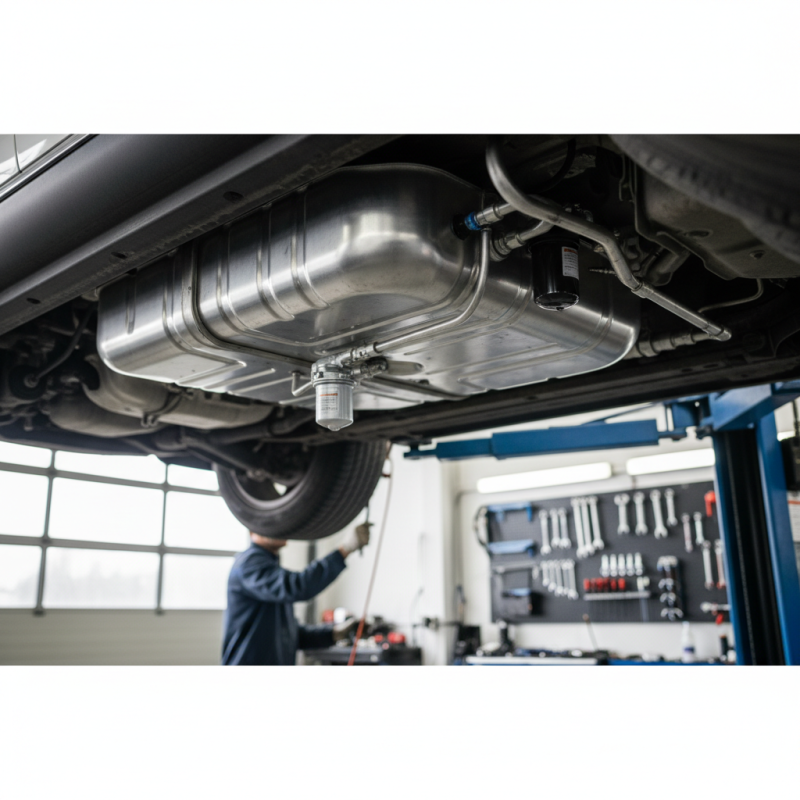
Maintaining your fuel tank is crucial for ensuring optimal vehicle performance and longevity. A well-maintained fuel tank not only enhances fuel efficiency but also safeguards the engine from harmful contaminants. According to a report by the American Petroleum Institute, nearly 30% of vehicles on the road suffer from poor performance due to fuel system issues, many of which stem from neglecting fuel tank maintenance.
One essential tip for maintaining your fuel tank is to regularly check for water accumulation and sediment. Water can lead to corrosion and rust, significantly reducing the lifespan of your tank. In fact, the National Renewable Energy Laboratory highlights that corrosion in fuel systems costs the automotive industry billions annually. Another important practice is to keep your tank at least a quarter full to minimize condensation and reduce the chance of sediment disturbing your fuel system.
Additionally, it is wise to use a fuel additive periodically to clean the fuel system and prevent deposits that can impair performance. Industry statistics indicate that using effective fuel additives can improve fuel injector performance by up to 21%, as per findings from various automotive maintenance studies. By following these tips, you can ensure your fuel tank remains in optimal condition, contributing to the overall efficiency and reliability of your vehicle.
Essential Tips for Maintaining Your Fuel Tank for Optimal Performance
| Maintenance Task |
Frequency |
Purpose |
Tips |
| Visual Inspection |
Monthly |
Identify leaks or damages |
Check for rust or corrosion |
| Fuel Filter Replacement |
Every 20,000 miles |
Prevent fuel contamination |
Use high-quality filters |
| Fuel Additives |
As needed |
Improve fuel quality |
Choose appropriate additives |
| Tank Cleaning |
Every 2 years |
Remove sludge and contaminants |
Hire a professional service |
| Check for Water Contamination |
Every fuel fill-up |
Avoid engine issues |
Use water-absorbing filters |
Regular Inspection and Cleaning of the Fuel Tank
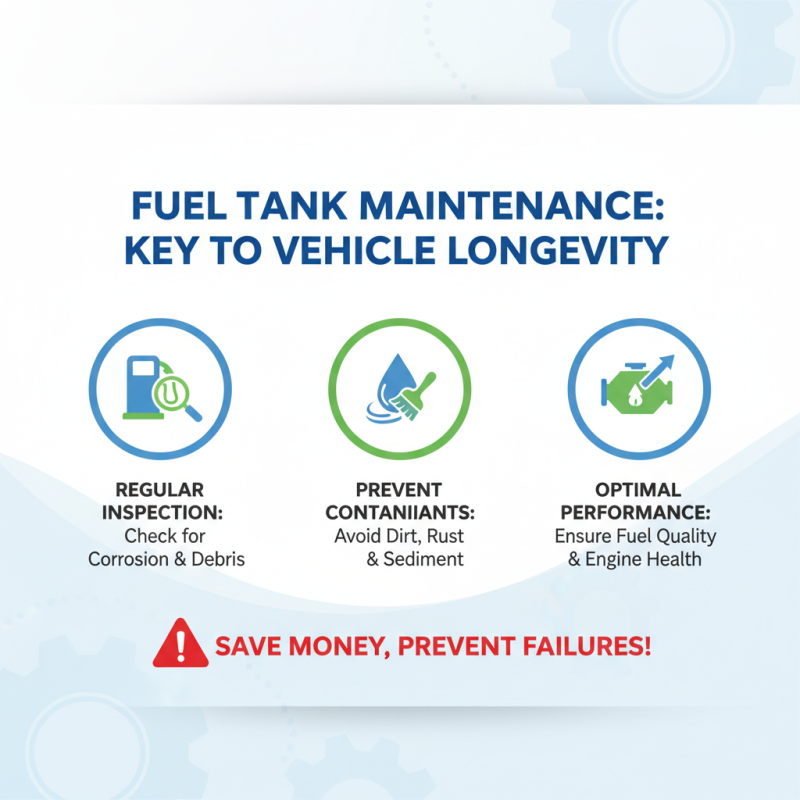
Regular inspection and cleaning of your fuel tank are crucial practices for ensuring optimal performance and longevity of your vehicle. Over time, contaminants such as dirt, rust, and sediment can accumulate in the fuel tank, adversely affecting fuel quality and engine performance. By regularly checking the tank for any signs of corrosion or debris, you can prevent potential issues that could lead to costly repairs or even engine failure.
One effective tip for maintaining your fuel tank is to incorporate a scheduled inspection routine. Check the tank's condition every few months, especially before long trips. Look for any leaks, damage, or unusual rust. If you notice any irregularities, consult a professional mechanic to address the problems immediately. Additionally, consider using a fuel additive designed to clean fuel systems, which can help break down deposits and enhance the overall fuel quality.
Another essential aspect of maintaining your fuel tank is cleaning. If you find significant buildup inside your tank, it may be necessary to remove and clean it. This process typically involves draining the tank, rinsing it with a suitable cleaning solution, and allowing it to dry completely before refilling. Always follow safety precautions during this process, and never hesitate to seek professional assistance if you're unsure about any step. Regular cleaning not only improves performance but also extends the life of your fuel system components.
Monitoring Fuel Quality and Additives
Monitoring fuel quality and additives is crucial for maintaining your fuel tank and ensuring optimal performance in any vehicle. According to the American Petroleum Institute (API), approximately 70% of engine issues stem from inadequate fuel quality. Contaminated fuel can lead to a build-up of deposits in the fuel system, causing poor combustion and reduced efficiency. Regular testing of fuel quality can help detect impurities, such as water, dirt, and microbial presence, which can adversely affect engine performance and longevity. It's advisable to check fuel quality routinely, particularly if the fuel has been stored for an extended period.
In addition to monitoring fuel quality, the incorporation of appropriate fuel additives can substantially enhance the performance of your engine. The Fuel Additives Manufacturers Association (FAMA) reports that the use of additives can reduce emissions by 30% while improving fuel economy by up to 5%. These additives often include detergents, which help clean the fuel injectors and prevent carbon deposits, and stabilizers that prevent the degradation of fuel over time. Opting for high-quality fuel with the right chemical formulations can lead to more efficient engine performance, reduced maintenance costs, and prolonged vehicle life. Employing such strategies is not just about enhancing performance but also about promoting a cleaner environment.
Identifying and Addressing Fuel System Leaks
Identifying fuel system leaks is crucial for maintaining your vehicle's overall performance and ensuring safety on the road. A fuel leak can not only diminish engine efficiency by reducing fuel pressure but can also lead to potentially dangerous situations such as fires or engine failures. Regularly inspecting the fuel lines, connections, and tank for any signs of wear or damage is essential. Look for visible leaks or stains, which may indicate a loss of fuel. Additionally, pay attention to the smell of gasoline, as it can be an early warning sign of a leak.
To effectively address fuel system leaks, start by conducting thorough inspections. Avoid working on your fuel system without first relieving pressure from the fuel tank, as this can lead to dangerous situations. If you detect a leak, immediate action is necessary. Small leaks can sometimes be repaired with sealants or clamps, but significant damage may require the replacement of parts, such as fuel lines or connectors. Always prioritize safety by ensuring that any repairs are done in a well-ventilated area away from open flames, and consider consulting a professional if you're uncertain about the nature of the leak or the best course of action. Regular maintenance checks can greatly reduce the risk of leaks occurring and help keep your fuel system running optimally.
Implementing Seasonal Maintenance Practices for Fuel Tanks
Maintaining your fuel tank is crucial for ensuring optimal performance throughout the year. Implementing seasonal maintenance practices can significantly prolong the life of the tank and improve overall efficiency. Research shows that an estimated 25% of fuel-related issues stem from a lack of proper maintenance, highlighting the importance of seasonal checks. As seasons change, temperature fluctuations can cause condensation to form inside fuel tanks, leading to water accumulation and potential corrosion.
Tip 1: Regularly check and clean your fuel tank to prevent sediment and algae buildup. It’s recommended to perform this cleaning at least twice a year, ideally at the onset of spring and fall. This ensures that your tank remains free of contaminants that can impede fuel flow and engine performance.
Tip 2: Fuel quality can degrade over time, especially in warmer months when evaporation rates increase. For optimal maintenance, consider using a fuel stabilizer during the summer to prevent oxidation and deterioration. Data from industry reports suggest that using stabilizers can extend the shelf life of fuel by up to 24 months, reducing the chances of engine troubles.
Tip 3: Pay attention to fuel levels. Keeping your tank at least half full not only minimizes condensation but also ensures better fuel delivery during colder months. A full tank can help maintain overall fuel stability and reduce the risk of freezing in extreme temperatures.