How to Choose the Right Metering Pump for Your Needs?
Choosing the right metering pump can significantly impact operational efficiency in various industries. According to a recent report by BCC Research, the global metering pump market is projected to reach $4.1 billion by 2026, indicating a growing reliance on these devices for precise fluid handling. Industries ranging from agriculture to chemicals heavily depend on metering pumps for accurate dosing.
Accurate selection is crucial. A mismatched metering pump can lead to inefficiencies or increased costs. The report highlights that improper sizing can waste energy, while over-specification can inflate budgets. Small adjustments in pump settings may sometimes go unnoticed. These increments can accumulate, causing operational disruptions.
Finally, understanding specific application needs is essential. Different liquids require different pump types. The material compatibility, viscosity, and flow rates all play a role in the selection process. An ill-informed choice may lead to failures or maintenance issues. This emphasizes the importance of a thorough evaluation when choosing a metering pump.
Understanding the Basics of Metering Pumps and Their Functions
Choosing the right metering pump can be challenging. It’s crucial to understand their basic functions. Metering pumps precisely deliver a specific volume of liquid. They are widely used in industries like water treatment, chemical processing, and food production.
According to the Pumps & Systems industry's report, the global metering pump market is expected to grow by 5-7% annually from 2020 to 2025. This growth is driven by the increasing demand for accurate dosing in various applications. For instance, in water treatment, precise metering can significantly affect chemical efficiency. Inaccurate dosing might lead to system failures or increased operational costs.
Different metering pumps operate on various principles, such as positive displacement and diaphragm designs. Each type offers distinct advantages and challenges. Positive displacement pumps, for instance, can handle viscous fluids but may require more maintenance. Understanding these details is essential for making informed decisions. Selecting the wrong pump not only wastes resources but can cause operational setbacks. Choosing wisely is key.
Identifying Your Specific Application Requirements for Metering Pumps
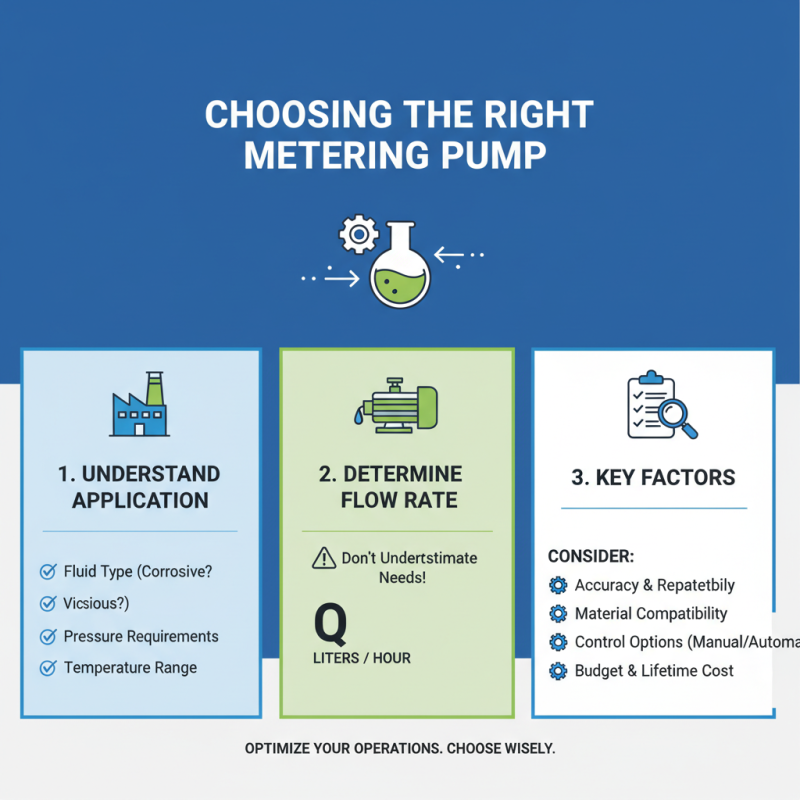
When choosing a metering pump, understanding your specific application is crucial. Different industries have unique requirements. For example, the pharmaceutical sector generally demands high precision to ensure accurate dosing. Data shows that nearly 65% of pharmaceutical applications require pumps that handle a wide range of viscosities. In contrast, water treatment facilities may prioritize chemical resistance over precision.
In addition, flow rates are vital. Metering pumps can vary from very low to high flow rates. For instance, a pump that delivers 1 to 1000 mL/h can be ideal for laboratory environments. However, larger systems may need pumps offering higher output.
**Tip:** Clearly define the desired flow rate and pressure range before selecting a pump. Consider materials that suit your specific fluids.
It's worth noting that not all metering pumps function optimally across diverse applications. Some may experience issues like wear and corrosion, leading to reduced efficiency. Regular assessments are necessary to mitigate potential failures.
**Tip:** Regular maintenance can extend a pump’s life. Schedule checks periodically to ensure reliability.
Ultimately, selecting the right metering pump requires assessing your unique needs thoroughly. This process can be daunting, but the right approach will ensure effectiveness and longevity.
How to Choose the Right Metering Pump for Your Needs?
| Application |
Flow Rate (GPH) |
Discharge Pressure (PSI) |
Fluid Type |
Pump Type |
| Chemical Dosing |
1-10 |
25 |
Corrosive liquids |
Diaphragm Pump |
| Water Treatment |
10-50 |
40 |
Water and chemicals |
Gear Pump |
| Food Processing |
5-30 |
15 |
Food-grade liquids |
Peristaltic Pump |
| Pharmaceutical |
0.5-5 |
50 |
Sterile solutions |
Diaphragm Pump |
| Industrial Processes |
20-100 |
75 |
Viscous fluids |
Progressive Cavity Pump |
Evaluating Different Types of Metering Pumps Available in the Market
When selecting a metering pump, understanding the types available is crucial. There are diaphragm pumps, peristaltic pumps, and gear pumps, each serving unique applications. According to industry reports, diaphragm pumps are widely used in chemical processing. They offer high accuracy and can handle viscous fluids. However, their maintenance can be a challenge. Users often overlook the wear and tear on diaphragms, which can lead to costly downtimes.
Peristaltic pumps are another option, ideal for applications requiring sanitary conditions. They are easier to clean, making them popular in food and pharmaceutical industries. A report shows a growing demand for these pumps due to their gentle handling of products. Nonetheless, their flow rate can be inconsistent, and users must monitor performance closely. This variability can be frustrating, especially in precise dosing situations.
Gear pumps provide a different approach. They deliver a continuous flow, making them suitable for applications needing high pressure. However, they can struggle with abrasive materials, and their efficiency can diminish over time. Some industries report issues with back pressure, leading to inefficiencies. Understanding these characteristics helps in making informed decisions, but the choice still requires careful consideration. Each type has its strengths and weaknesses, and evaluating them is an ongoing process for many users.
Comparative Analysis of Metering Pump Types
Assessing Maintenance and Support for Optimal Pump Performance
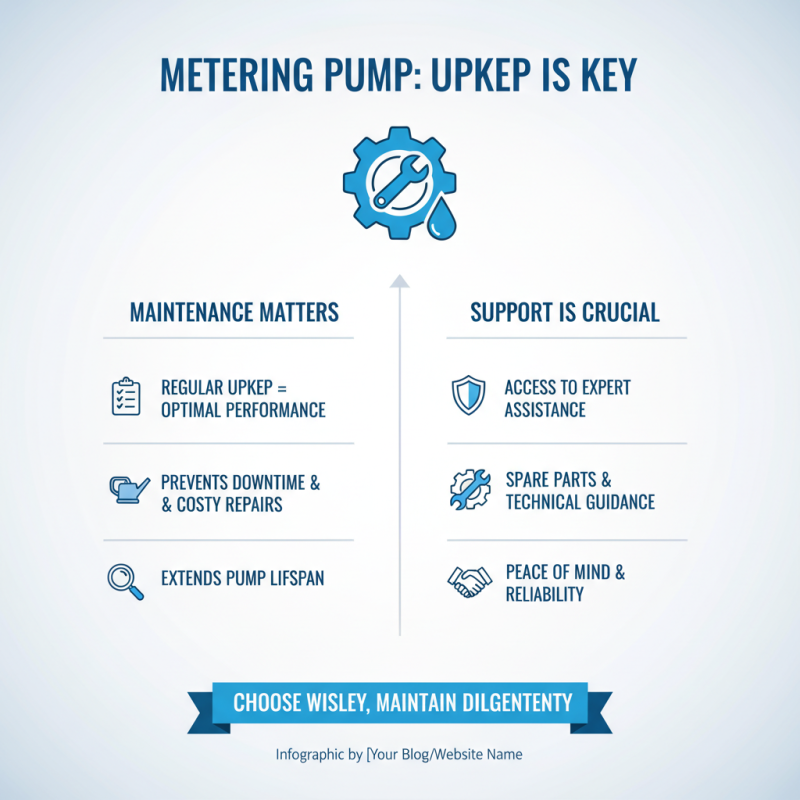
When selecting a metering pump, maintenance and support are crucial factors. A good pump requires regular upkeep. Neglecting this can lead to performance issues. It can also result in costly repairs. Understanding the maintenance requirements of your chosen pump is essential.
Consider the availability of technical support. This is vital, especially during emergencies. You want to ensure help is just a call away. Some pumps come with extensive service plans, while others do not. Evaluate if the support provided meets your operational needs. A missed call can lead to system downtime, which is costly.
Think about how easy the pump is to maintain. Is it user-friendly? Can your team handle routine tasks? If not, consider training. You may also need to rethink your choices. Investing time in understanding the maintenance landscape can save you headaches later. Finally, remember that perfect solutions don’t exist. Regularly reassess your choices as needs evolve.