How to Choose the Right Chemical Dosing Pump for Your Needs?
Choosing the right chemical dosing pump is crucial for various industries. Reports show that the global chemical dosing pump market is projected to grow significantly, reaching approximately $5 billion by 2026. This growth highlights the increasing reliance on efficient dosing solutions in sectors like water treatment and pharmaceuticals.
Selecting a chemical dosing pump requires careful consideration. Not all pumps are designed for the same applications. Many users fail to account for specific needs like flow rate, pressure, and fluid type. For example, a pharmaceutical company may need a pump that ensures precise dosing for strict regulatory compliance.
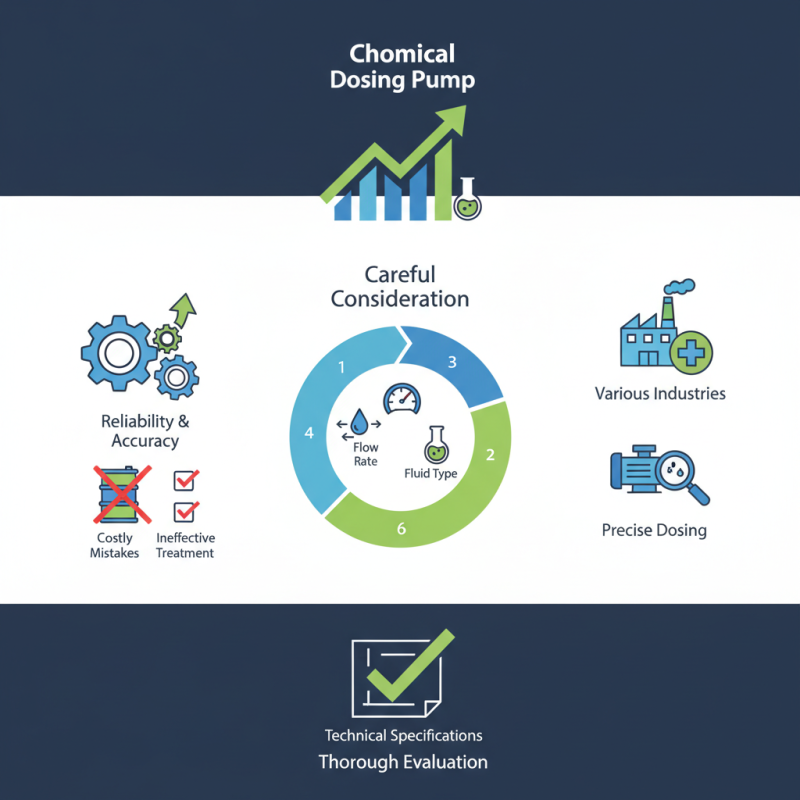
Industry experts emphasize the importance of reliability and accuracy. Many systems can deliver varying results based on their design and maintenance. Inadequate pump selection can lead to overuse of chemicals or ineffective treatment processes. Careful evaluation of technical specifications can prevent costly mistakes. Thus, it's imperative to consider all factors thoroughly when choosing a chemical dosing pump.
Understanding the Basics of Chemical Dosing Pumps
Chemical dosing pumps are essential for various industries. They control the flow of liquids and ensure the correct amount of chemicals is added. Understanding the basics can help you choose the right pump for your needs.
When selecting a chemical dosing pump, consider the fluid's viscosity. Thicker liquids require a pump with more power. The flow rate matters too. You need a pump that can handle the required volume without delays.
**Tips:** Always evaluate the materials used in the pump. Compatibility is key to avoid corrosion and damage.
Another point to reflect on is the pump's maintenance. Some pumps require frequent checks, which can be time-consuming. It’s not just about choosing one; you need to factor in longevity and upkeep.
**Tips:** Look for a pump that offers easy access for maintenance. This can save you time and money in the long run.
How to Choose the Right Chemical Dosing Pump for Your Needs?
| Pump Type |
Flow Rate (L/h) |
Pressure (bar) |
Max Viscosity (cP) |
Power Supply |
| Diaphragm Pump |
5 - 50 |
2 - 8 |
100 |
110V/220V |
| Peristaltic Pump |
1 - 100 |
0.5 - 3 |
300 |
12V/24V |
| Gear Pump |
10 - 200 |
10 - 15 |
500 |
AC Power |
| Electronic Metering Pump |
0.5 - 150 |
2 - 5 |
50 |
110V/220V |
| Lobe Pump |
5 - 80 |
1 - 10 |
150 |
AC Power |
Evaluating the Different Types of Chemical Dosing Pumps
When selecting a chemical dosing pump, understanding the different types available is crucial. Positive displacement pumps are commonly used. They deliver a fixed amount of liquid per stroke. This makes them great for precise dosing. However, they can struggle with fluctuations in pressure. They might not suit all applications.
Another option is the centrifugal pump. These are ideal for high flow rates. They work well in various environments. But they may not provide the accuracy needed for low flow applications. Users often overlook this aspect. It’s essential to evaluate how accurately the pump needs to deliver chemicals.
Diaphragm pumps are another choice. They are versatile and minimize leakage. However, they can be sensitive to abrasive chemicals. Users sometimes find this out the hard way. Each type of pump has its strengths and weaknesses. It’s vital to weigh these factors to find the right solution for specific needs. Don't rush the decision; reflect on the long-term implications of your choice.
Key Factors to Consider When Selecting a Dosing Pump
When choosing a dosing pump, several key factors come into play. The intended application greatly influences your choice. For example, industries like water treatment and pharmaceuticals require precise dosing for successful operations. In a recent market analysis, it was noted that the global chemical dosing pump market is expected to grow at a CAGR of 6.5% through 2026, underscoring the increasing demand and importance of proper selection.
Flow rate is another critical consideration. Pumps typically operate within specific flow range limits. For instance, a flow rate of 2-200 gallons per hour may be suitable for small-scale applications, but larger systems might necessitate rates exceeding 1,000 gallons per hour. Miscalculating this could lead to inefficiencies or even system failures.
Material compatibility is vital as well. The wrong materials can lead to corrosion and pump failure. In fact, about 30% of pump failures are attributed to material issues. It’s essential to match the pump's materials with the chemicals being handled. This underscores the necessity of thorough research and understanding. Not every pump will suit every need, and overlooking this can be costly.
Assessing Flow Rate and Pressure Requirements for Your Application
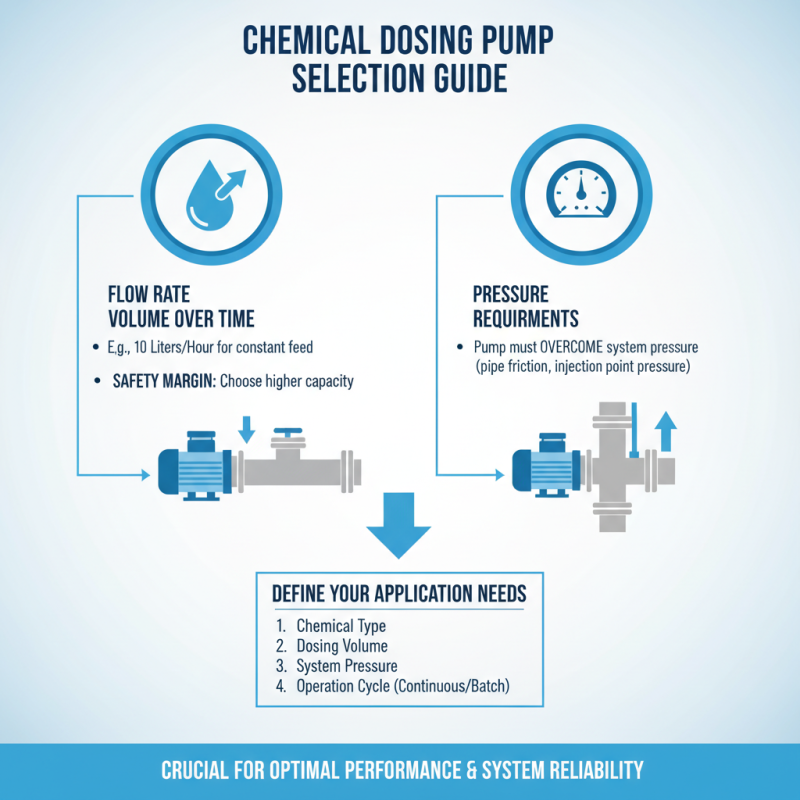
When selecting a chemical dosing pump, understanding flow rate and pressure requirements is crucial. It is important to determine the specific needs of your application. The flow rate indicates how much chemical is delivered over time. For example, if your system requires a constant flow of 10 liters per hour, ensure the pump can match this demand consistently. It's often useful to have a margin of safety—aim for pumps with slightly higher capacities.
Pressure requirements can significantly impact pump selection. Some applications may need high pressure to ensure proper chemical mixing or to reach distant inject points. If the required pressure is too high, cascading failures can occur, leading to costly downtime. Assessing these needs can prevent mistakes that arise from inadequate specifications.
Evaluating both flow rate and pressure requires careful reflection. Production environments can vary greatly. What works for one setup might not suit another. Always consider the unique characteristics of your system. Relying solely on specifications may lead to overlooking essential factors. Remember, a detailed assessment can save time and resources in the long run.
Maintenance and Support Considerations for Dosing Pumps
When selecting a dosing pump, maintenance and support are crucial factors. Regular maintenance can enhance performance and extend the pump's lifespan. A study by the Chemical Engineering Research and Design journal highlights that proactive maintenance can reduce downtime by up to 30%. This reduction can significantly elevate overall productivity in industrial settings.
Consider the complexity of maintenance. Some pumps require specialized tools. Not all facilities are equipped for such tasks. Moreover, training staff on maintenance procedures is necessary. A lack of training can lead to costly mistakes or pump failures. Data from industry reports suggests that inadequate training can lead to a 15% increase in operational costs over time.
Support services also play a key role. Reliable technical support can help troubleshoot issues quickly, minimizing operational disruptions. However, assessing the support options offered by vendors is essential. Not all companies provide timely assistance or easy access to spare parts. Research shows that 40% of businesses experience delays in obtaining necessary components. This can affect production schedules and lead to frustration.