Choosing a vacuum pump in 2026 is less about finding a single “best” model and more about matching equipment to the job. A pump that performs well in a clean laboratory may struggle with solvent vapor, frequent start-ups, or a production line running all day. The right choice depends on measurable needs: required pressure, pumping speed, gas composition, duty cycle, and tolerance for oil or maintenance.
Common options include rotary-vane pumps for many general-purpose applications, diaphragm pumps where oil-free operation matters, and scroll pumps for cleaner, quieter vacuum service. Dry screw pumps can suit demanding industrial processes, though their purchase and service costs may be higher. Those are starting points, not guarantees. Check the manufacturer’s performance curves at your actual operating pressure, rather than relying only on a headline flow-rate figure. Also consider the system around the pump: hose diameter, leaks, filters, vapor traps, and the volume of the chamber all affect results.
Small details matter. A pump may meet a target pressure on paper but take too long to evacuate a large vessel. Oil changes can become a burden in a busy workshop. There is no perfect choice. This guide compares pump types, practical trade-offs, and key selection questions to help you shortlist suitable models. Verify specifications with current datasheets and, when the process is unusual, consult a qualified supplier before buying. One overlooked issue can change the answer.
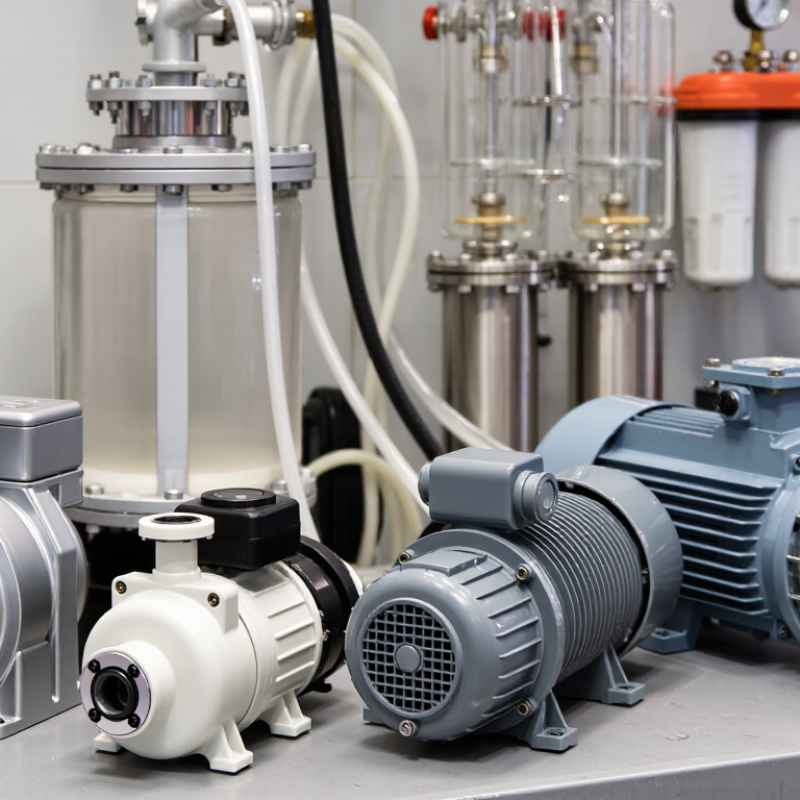
Choosing a vacuum pump starts with the pressure your process must actually reach. Rough vacuum spans about 1,000 to 1 mbar, covering tasks such as drying, filtration, and basic chamber evacuation. A diaphragm or rotary-vane pump may suit these jobs, depending on gas compatibility, duty cycle, and maintenance needs. Check the working pressure under load, not only the pump’s stated ultimate pressure. They differ.
For high and ultra-high vacuum, a single pump is rarely enough. A turbomolecular pump typically needs a backing pump, while UHV systems below 10⁻⁷ mbar also demand careful control of leaks, outgassing, and contamination. Metal seals, clean chamber surfaces, and sometimes bakeout can help. Even a small trapped pocket of air can slow the process. In practice, system design matters as much as the pump; this is easy to underestimate.
Tips: Write down the target pressure, chamber volume, gas type, and pump-down time. Compare these with performance curves and service requirements. If the pressure target is uncertain, measure the process first; choosing from a guessed number can lead to an expensive mismatch.
Choosing a vacuum pump starts with the pressure your process actually needs, not the lowest number on a brochure. Diaphragm pumps suit many clean, modest-vacuum tasks, such as drying small samples. Rotary-vane pumps can reach lower pressures, but their oil may migrate into the chamber. That matters when coating, microscopy, or sensitive materials demand clean conditions. High-vacuum systems often use turbomolecular pumps, typically backed by another pump. They can reach very low pressures, but need careful setup and compatible connections.
Gas compatibility deserves equal attention. Corrosive vapors can damage wetted parts, while condensable solvents may contaminate oil or reduce pumping performance. Check the gas’s chemical properties, expected flow, and moisture level against the pump’s materials and operating limits. For oil-sealed models, traps and filters can reduce backstreaming, but they add maintenance. Dry pumps avoid oil in the pumping chamber, though “dry” does not mean immune to chemical attack.
Contamination control is not just a pump choice. Short, clean tubing and a well-placed trap can protect both the chamber and the pump. Small details matter. A process that changes between batches may need more flexibility than the initial specification suggests. I would verify pressure under real operating conditions; the stated ultimate pressure alone can be misleading. The best fit is the pump that reaches the required range with acceptable gas handling, upkeep, and contamination risk.
Compare typical ultimate pressure, gas compatibility, and contamination considerations across common vacuum pump types.
How to read the chart: Bars show representative ultimate-pressure ranges in mbar; lower pressure means a deeper vacuum. Actual performance depends on pump design, gas load, operating conditions, and system setup.
| Pump type | Typical gas compatibility | Contamination considerations |
|---|---|---|
| Diaphragm | Air and inert gases; compatible materials can support some corrosive gases | Oil-free pumping; check diaphragm and valve material compatibility |
| Rotary vane | Air and many non-corrosive gases; condensable vapors may require precautions | Pump oil can backstream or contaminate the process |
| Dry screw | Broad gas range; corrosive or hazardous service depends on materials and purge configuration | Oil-free compression; process residues may build up inside the pump |
| Scroll | Clean, dry air and inert gases; moisture and particles can affect performance | Oil-free; tip-seal wear can introduce particles |
| Turbomolecular | Many gases in high-vacuum service; requires a backing pump and suitable gas-flow conditions | No pumping oil in the high-vacuum stage; backing-pump contamination may still matter |
| Diffusion | Many gases and relatively high gas loads; condensable vapors may need trapping | Pump-fluid backstreaming is possible; baffles or cold traps can reduce risk |
Pressure ranges are representative, approximate ultimate-pressure ranges—not guaranteed specifications. Consult pump documentation and assess gas chemistry, vapor load, and contamination limits for your application.
Vacuum pump sizing starts with gas load, not chamber volume alone. Use S = Q/P, where Q is throughput and P is the target pressure; keep units consistent. Then account for the connecting line: 1/Seff = 1/Spump + 1/C, where C is line conductance. CERN Accelerator School vacuum-course notes explain that conductance varies with tube geometry, gas, pressure regime, and flow path. At molecular-flow conditions, a narrow, long hose can sharply reduce speed at the chamber. A pump rated at 10 L/s may deliver much less through restrictive plumbing. CERN course notes place air’s mean free path near 68 mm at 0.1 Pa at room temperature. That benchmark helps identify when molecular-flow conductance may matter.
For example, if Q is 0.02 Pa·m³/s and target pressure is 0.01 Pa, ideal chamber-side speed is 2 m³/s, or 2,000 L/s. That calculation is a starting point, not a guarantee. Outgassing, leaks, valves, and bends can raise the actual load or restrict flow. A larger pump may help, but improving the line can be the more practical choice.
Tips: Measure gas load where possible, then estimate conductance from the narrowest line section. Check speed at the chamber, not just the pump inlet. Record the pressure and gas conditions; small changes can make the calculation look better than the real setup.
A vacuum pump’s headline rating is only a starting point. ISO 21360-1 describes general methods for measuring vacuum-pump performance. Use the applicable test method and check how the reported values were obtained. Look for pumping speed, pressure range, gas type, and test conditions. Small differences matter.
Ask for a test report, not just a catalogue figure. It should identify the measurement location, instruments, inlet conditions, and pump configuration. Compare results only when these conditions are alike. A pump tested with one gas or setup may behave differently in your process. Read the fine print.
Think about the work you actually need done. A system evacuating a clean chamber may need different performance from one handling moisture or frequent pressure changes. Check whether accessories, gas ballast, or a backing pump affected the test. That detail is easy to miss. ISO-based measurements make comparisons more meaningful, but they cannot predict every installation. I would still verify performance under representative operating conditions before choosing a pump. A lab result is useful; your pipework, leaks, and cycle time can change the picture.
Choosing a vacuum pump in 2026 means looking beyond its purchase price. Electricity, scheduled maintenance, and replacement timing can change the real cost substantially. Start with the pump’s power rating and expected operating hours. A unit drawing 1.5 kilowatts for 2,000 hours uses about 3,000 kilowatt-hours annually. Multiply that figure by your local electricity rate. The estimate is simple, but actual consumption may vary with workload and operating conditions.
Maintenance costs depend on pump design and the demands of your process. Check the service interval for oil, filters, seals, and other wear parts. Then price those items and include technician time, especially if access is difficult. A pump in a dusty workshop may need attention sooner than the manual’s standard interval suggests. Manuals are useful, not magic. Keep a maintenance log; it can reveal patterns that estimates miss.
Compare costs over the expected service life, not just one year. For example, a lower-priced pump may require more frequent part changes, while a higher-priced model may use less power or last longer. Use realistic operating hours and local energy prices, then add planned service and likely downtime. Leave room for uncertainty. Actual life depends on installation, load, and care, and no spreadsheet can predict every failure. A careful estimate is still better than guessing.