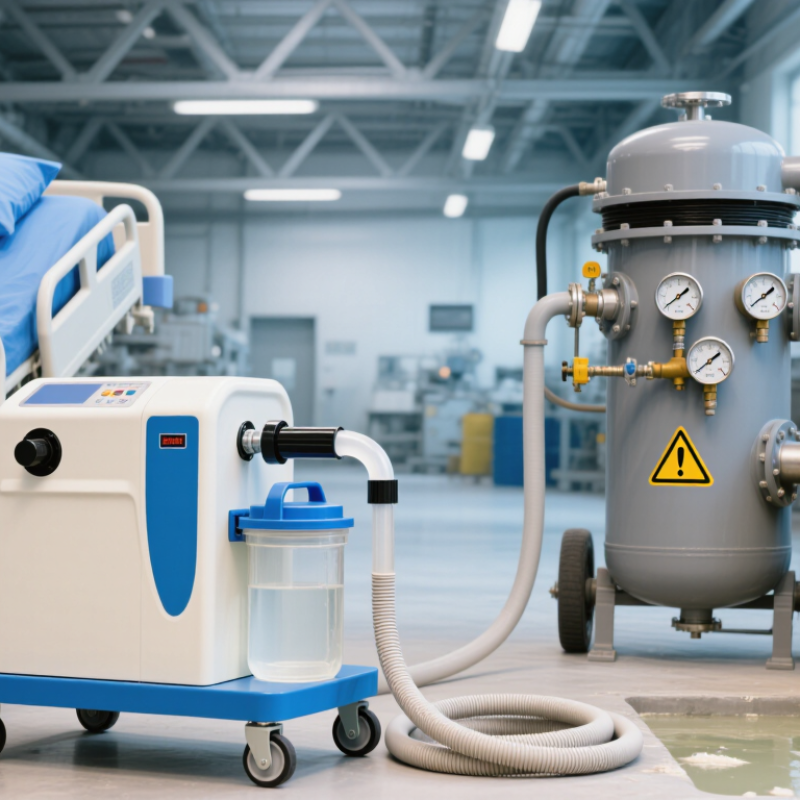
Choosing the best suction pump in 2026 is not simply a matter of comparing motor power or advertised flow rates. Global buyers face different fluids, temperatures, voltages, installation conditions, and service capabilities. A compact medical aspirator may need stable negative pressure beside a hospital bed. An industrial suction pump may operate near abrasive wastewater, oil, or chemical residues.
Market evidence supports this wider view. Grand View Research identifies rising healthcare demand, expanding manufacturing, and infrastructure investment as important drivers for suction and vacuum equipment. The International Energy Agency also continues to emphasize industrial efficiency, making energy consumption a practical purchasing measure. Buyers should therefore compare flow rate, vacuum level, noise, duty cycle, power consumption, maintenance access, and total cost of ownership.
Safety and conformity matter just as much. Medical equipment should be evaluated against ISO 10079-1 and applicable IEC 60601 requirements. Industrial installations may require different certification, material, and hazardous-area considerations. Local import rules must also be checked before ordering. A product that performs well in Germany may not be the right choice for a humid coastal plant in Southeast Asia.
There is no universal winner. That answer feels unsatisfying, but it is more reliable. This guide compares suction pump types through real operating conditions, supplier support, documented testing, and lifecycle costs. Manufacturer brochures help, but independent certificates and service records often reveal more. Buyers should also question unusually high performance claims. Sometimes, the cheapest pump becomes the most expensive one after six months of clogged filters, seal wear, or unavailable spare parts.
A suction pump moves liquid by creating lower pressure at its inlet. Atmospheric pressure then pushes liquid into the chamber. Simple physics. An impeller, diaphragm, or piston creates this pressure difference. The pump must also remove air from the suction line. Otherwise, it may spin without lifting water. A foot valve helps retain prime, while a strainer blocks stones and leaves. In field use, even a small air leak around a threaded joint can stop flow.
Selection should begin with suction lift, flow rate, liquid temperature, and viscosity. The U.S. Department of Energy reports that pumping systems can consume 25–50% of an industrial facility’s electricity. Efficiency matters beyond the purchase price. The 2024 UNESCO World Water Development Report states that agriculture accounts for roughly 70% of global freshwater withdrawals. Irrigation users therefore need dependable flow, manageable maintenance, and suitable corrosion resistance. ISO 9906 testing can help buyers compare hydraulic performance under defined conditions. Yet catalogue figures are not field results. Poor pipe sizing, long hoses, and high bends reduce actual output. I have seen a correctly rated pump underperform because its inlet hose was too narrow. That mistake is easy to repeat. A better decision includes verified test data, local service capability, spare-part access, and realistic operating conditions.arsuarmi
The best suction pump in 2026 depends on the material, vacuum level, flow rate, and service environment. Global buyers can choose from several established pump types. Each design solves a different operating problem.
Diaphragm pumps suit clean, oil-free suction and moderate chemical exposure. Their flexible membrane separates the fluid from moving parts. They work well in laboratories, medical equipment, and light industrial systems.
Piston pumps create stronger vacuum levels and handle demanding cycles, but seals may wear faster.
Rotary vane pumps deliver stable vacuum performance for packaging and manufacturing. They often need clean oil and regular filter checks.
Liquid ring pumps tolerate moisture and vapor better than many dry designs. However, they can consume more water and energy.
Peristaltic pumps offer gentle handling because the fluid touches only the tube. This helps with sensitive or contaminated liquids.
From practical equipment reviews, sizing errors cause more failures than pump defects.
A pump rated for impressive peak flow may perform poorly through narrow hoses or dirty filters. Buyers should request vacuum curves, noise data, material certificates, maintenance intervals, and factory test records.
Check voltage and spare-part availability in the destination country.
I have seen systems selected only by price. They later required costly seal replacement and downtime. That choice looked efficient on paper. It was not.
Buyers should also question unclear performance claims and confirm results under real temperature, viscosity, and altitude conditions.
What Is the Best Suction Pump in 2026 for Global Buyers?
The best suction pump depends on the duty, not the catalog headline. Measure required flow, lift, liquid temperature, and solids content before comparing models. A pump rated at 100 liters per minute may lose performance through a narrow hose or clogged strainer. Net positive suction head is critical. Poor NPSH conditions can cause cavitation, vibration, and early seal damage. The Hydraulic Institute recommends evaluating NPSH margin under actual operating conditions, not only at the rated point.
Energy deserves equal attention. The U.S. Department of Energy reports that pumping systems can consume 25–50% of industrial facility electricity. Therefore, compare efficiency across the normal duty range, not just peak efficiency. ISO 9906 provides testing guidance for centrifugal pump performance, including flow, head, and efficiency. Ask for tested curves and tolerance information. Small errors become expensive over thousands of operating hours.
Reliability also appears in practical details. Inspect the inlet screen, check valve, seals, cable protection, and service access. Stainless materials may suit corrosive liquids, but material compatibility must be verified with concentration and temperature data. Noise matters near homes, hospitals, and enclosed workspaces. The European Commission’s Ecodesign work on water pumps also emphasizes lifecycle efficiency rather than purchase price alone. I would not trust a perfect laboratory curve without field records. Installation quality often decides the result. That part is easy to underestimate.
Choosing the best suction pump in 2026 depends on the application, not marketing claims. A pump for basement drainage needs different performance from one used for laboratory liquids or agricultural transfer. Check the required flow rate, suction lift, discharge height, and liquid viscosity. Also measure the hose length and diameter. Small details can reduce performance sharply.
For dirty water, select a model with suitable solids handling and easy cleaning access. For chemicals, confirm material compatibility with every wetted component.
For food or sensitive liquids, hygienic construction and documented safety testing matter. Electric models should match local voltage and duty cycles.
A higher flow rate is not always better. In field use, oversized pumps may waste energy and create unnecessary pressure. I have also seen buyers ignore noise levels, then regret the choice indoors.
Tips:
Compare test data under realistic conditions, not ideal laboratory figures. Ask for curves showing flow against head pressure. Check spare-part availability, seal replacement methods, and protection against dry running.
Keep a small safety margin, but avoid excessive capacity. Record the liquid temperature and expected operating hours before ordering.
One overlooked point is portability; a heavy pump may perform well but remain impractical on remote sites. When specifications conflict, request written clarification and verify the information with an independent technician.
The best suction pump in 2026 depends on the application, destination, and service environment. Global buyers should compare stable vacuum performance, airflow, noise, and duty cycle. Peak vacuum alone can mislead. I have seen pumps perform well in factory tests but struggle with humid rooms and long hoses.
Safety and compliance require practical checks before purchase. Confirm the correct voltage, frequency, plug type, grounding method, and overload protection. For healthcare use, verify applicable electrical, electromagnetic, and medical-device requirements in the destination market.
Request a declaration of conformity, test reports, user instructions, and material information for every fluid-contacting component. Documentation gaps can delay customs clearance and complicate installation.
Maintenance planning often decides the real cost. Oil-free models reduce handling, while oil-lubricated units may offer smoother long-term operation. Inspect filters, tubing, seals, and collection containers on a written schedule. A visible vacuum gauge helps staff notice gradual performance loss. Keep replacement parts available locally, if possible.
Shorter downtime matters. Ask the supplier about technician training, warranty response times, and service language. One weakness remains common: buyers may select a pump without testing their actual hose length, liquid load, or cleaning routine. A small site trial can reveal more than a polished specification sheet.