Choosing the 2026 best Green Matcha Powder requires more than comparing bright color and low prices. Wholesale buyers need evidence, consistency, and practical supply details.
Tea educator Jane Pettigrew has said, “Good tea begins with good leaves and careful handling.” That principle matters here. High-quality Green Matcha Powder starts with shade-grown tencha, careful steaming, slow drying, and fine stone milling. The result should feel soft between the fingers, dissolve smoothly, and release a fresh aroma resembling young grass, spinach, or sweet peas. Harsh bitterness can signal poor raw material or careless processing.
Details matter.
This guide examines matcha grades, harvest timing, origin, particle size, flavor stability, and wholesale packaging. It also considers certificates of analysis, pesticide testing, heavy-metal screening, allergen controls, and traceable batch records. Buyers should request current documentation rather than trusting attractive labels alone. Organic certification may support purchasing decisions, but it does not automatically guarantee superior taste.
Some assumptions deserve questioning. The greenest powder is not always the freshest, and ceremonial labeling can vary between suppliers. A low price may reflect efficient production, or it may hide weaker sourcing. Storage also changes the outcome. Heat, oxygen, moisture, and transparent packaging can dull a vivid powder surprisingly quickly.
For cafes, retailers, beverage manufacturers, and private-label brands, the best Green Matcha Powder is the one that performs reliably after delivery. It should taste balanced in water, milk, and blended drinks. It should also arrive in packaging that protects quality from the warehouse to the customer’s cup.
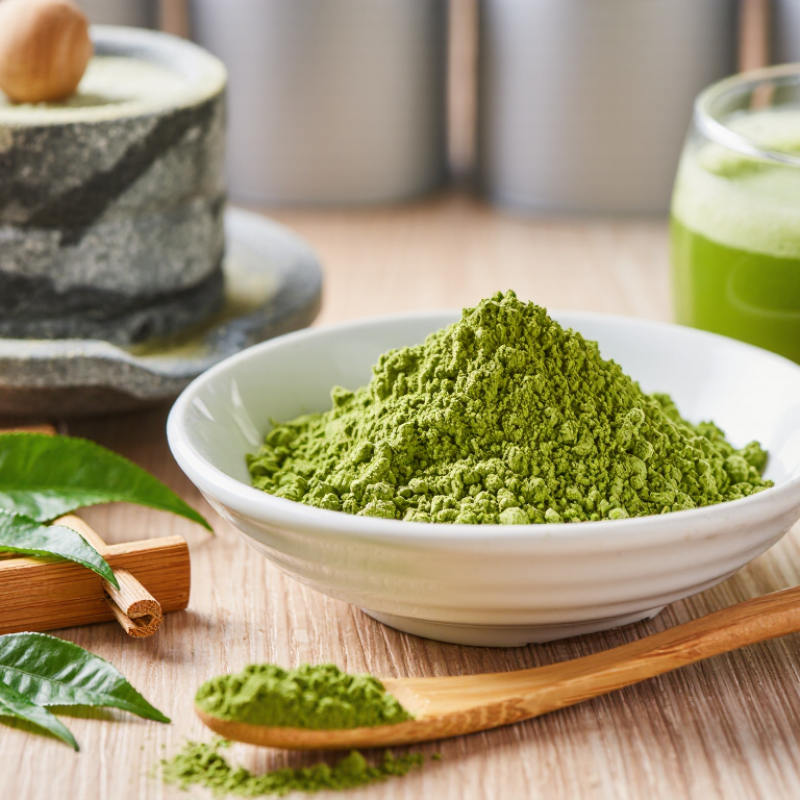
2026 Best Green Matcha Powder for Wholesale Buyers?
High-quality matcha starts with careful cultivation, not attractive packaging. Tencha leaves should be shade-grown before harvest, then steamed, dried, and finely milled. Bright jade color often signals strong chlorophyll retention. A dull olive tone may indicate oxidation, aging, or excessive heat.
Grand View Research valued the global matcha market at approximately USD 3.44 billion in 2023. It also projects strong growth through 2030. This expansion raises a difficult question: can supply quality keep pace? Wholesale buyers should request harvest dates, growing regions, and lot-specific traceability records. “Ceremonial” alone proves very little.
Laboratory evidence matters more in 2026. Testing should cover pesticide residues, heavy metals, microbes, moisture, and foreign matter. The European Food Safety Authority continues to emphasize exposure assessment for contaminants in food products. Buyers should also review certificates from accredited laboratories, not only supplier declarations. Taste remains practical evidence: premium powder should feel smooth, dissolve evenly, and offer fresh grassy sweetness with restrained bitterness. Harsh bitterness is a warning sign. Sometimes, it is simply over-extraction, though buyers should not assume that without testing.
Choosing the best green matcha powder for wholesale buyers requires more than judging color.
Grade names help, but they are not globally standardized. Ceremonial matcha usually offers a smooth texture, vivid green color, and gentle umami. It suits whisked drinks and premium menus. Premium grades balance flavor and price. Culinary matcha brings stronger bitterness and works well in lattes, bakery products, sauces, and blends.
Origin affects taste, aroma, and supply planning.
Japanese matcha often shows fresh grass, mild sweetness, and clear umami. Other producing regions may offer deeper vegetal notes or more competitive pricing. Growing conditions matter, too. Shade cultivation can increase chlorophyll and soften bitterness.
After harvest, leaves should be steamed, dried, deveined, and finely stone-milled.
Poor storage can flatten aroma quickly. Dusty texture is a warning sign. Maybe not always, but it deserves investigation.
Tips:
Ask for harvest dates, origin details, milling information, and batch traceability. Request independent testing for pesticides, heavy metals, moisture, and microbiological safety. Review a physical sample before approving a large order. Compare the powder after whisking, not only in the package. A bright green color can impress buyers, yet it cannot prove freshness or quality. Confirm destination-market requirements and packaging conditions. No grade label solves every problem. Supplier consistency still needs checking.
Wholesale evaluation should begin with measurable quality, not a bright product photograph. Color should appear vivid jade, not dull olive. A calibrated L*a*b* test can support visual inspection. Higher green value often suggests stronger chlorophyll retention, but color alone proves little. Flavor should show fresh grass, mild sweetness, and controlled umami. Harsh bitterness may indicate oxidation, poor storage, or excessive stem material. Texture should feel silky, never sandy. Particle-size testing and sieve results are useful here.
Purity requires independent laboratory evidence. Ask for pesticide, heavy-metal, microbiological, and foreign-matter reports by batch. ISO 14502-2 provides a recognized method for measuring catechins in tea products. Caffeine also varies with cultivar, shading, harvest, and serving size. The USDA FoodData Central database shows that powdered green tea can provide meaningful fiber and micronutrients, but its values are not a substitute for batch-specific analysis. Japan’s Ministry of Agriculture reported about 78,000 tonnes of tea production in 2023; however, the figure does not isolate matcha. That limitation matters.
Tips: Request three recent certificates, not one old document. Compare moisture, ash, catechins, caffeine, and microbial limits. Taste samples in water and milk. Record aroma after five minutes. I once trusted color too quickly; it looked excellent, yet the finish was flat. Sensory scoring needs trained tasters and repeat checks. Nutritional claims should match verified laboratory data, not optimistic label language. Fresh packaging helps, but cold storage cannot repair weak raw material.
For wholesale buyers, the best green matcha is not simply the brightest powder. It should show clean aroma, fine texture, balanced umami, and traceable origin. Japan’s Ministry of Agriculture, Forestry and Fisheries recorded approximately 78,000 tonnes of crude tea production in 2023. However, production has faced long-term pressure from aging farms and changing labor conditions. Supply planning matters.
Price comparisons must separate grade, milling method, testing, freight, and minimum order quantity. A low quote may exclude pesticide screening, heavy-metal analysis, or temperature-controlled storage. Request a lot-specific specification sheet and retain a sealed sample. Small details matter. Packaging should use light-blocking, oxygen-resistant materials, such as foil laminate, with nitrogen flushing where available. Confirm net weight, batch code, milling date, best-before date, and storage instructions. The packaging should survive a humid warehouse, not only a product photograph.
Certifications need verification, not decoration. Check the certificate number, issuing body, product scope, site address, and expiry date. Relevant systems may include HACCP, ISO 22000, and recognized organic certification, depending on the destination market. The USDA Foreign Agricultural Service Japan Tea Annual 2024 also highlights export-oriented demand and structural supply constraints. Buyers should therefore ask about harvest timing, annual capacity, backup lots, and lead times. A perfect forecast is impossible. I would avoid committing to a large annual volume before reviewing two or three consistent batches. Fresh color can fade quickly after opening, so warehouse rotation and sealed smaller packs deserve equal attention.
| Matcha Category | Typical Use | Color & Flavor Profile | Indicative Wholesale Price (USD/kg, FOB) | Recommended MOQ | Common Packaging Options | Typical Shelf Life | Best-Fit Buyer |
|---|---|---|---|---|---|---|---|
| Ceremonial-Style | Straight drinking, tea service, premium gift products | Bright green; smooth, umami-forward, low bitterness | $55–$120 | 10–25 kg | Foil-lined pouches, nitrogen-flushed bags, opaque tins | 12–24 months when sealed and stored cool, dry, and away from light | Specialty tea retailers and premium beverage brands |
| Premium Culinary | Lattes, smoothies, desserts, bakery, chocolate | Vivid to medium green; balanced vegetal notes and moderate bitterness | $32–$70 | 25–50 kg | Multi-layer food-grade bags, lined cartons, bulk pouches | 12–18 months under recommended storage conditions | Cafés, food manufacturers, and private-label beverage suppliers |
| Standard Culinary | Industrial baking, sauces, blended drinks, bulk foodservice | Green to olive green; stronger vegetal taste and higher bitterness | $18–$40 | 50–100 kg | Food-grade bulk bags, lined kraft sacks, sealed cartons | 12–18 months when protected from oxygen, heat, moisture, and light | Large foodservice distributors and commercial processors |
| Organic-Certified Grade | Organic retail, foodservice, supplements, and clean-label products | Varies by grade; certification does not itself define color or flavor | $35–$95 | 25–100 kg | Certified-lot packaging with traceability labels and tamper-evident seals | Usually 12–24 months, subject to validated lot specifications | Organic distributors and regulated retail channels |
| Sourcing Factor | Recommended Requirement | What Buyers Should Verify | Commercial Impact |
|---|---|---|---|
| Origin and Traceability | Documented growing, processing, and lot information | Country or region, harvest period, lot number, milling date, and chain-of-custody records | Improves consistency, recall readiness, and origin-based product claims |
| Food Safety Certifications | HACCP-based controls; ISO 22000 or FSSC 22000 where required | Valid certificate, certification scope, audit status, allergen controls, and foreign-material controls | May be essential for retailer approval and importer qualification |
| Organic Certification | Certification matching the destination market | USDA/NOP, EU organic, JAS, or another applicable standard; certificate holder and product scope | Adds verification costs but supports premium positioning and compliant claims |
| Laboratory Testing | Certificate of analysis for every production lot or agreed testing frequency | Microbiology, heavy metals, pesticide residues, moisture, foreign matter, and relevant local limits | Reduces regulatory, rejection, and product-recall risk |
| Packaging and Storage | Opaque, oxygen- and moisture-barrier, food-contact-compliant packaging | Inner liner, seal integrity, palletization, storage temperature, humidity controls, and transport protection | Protects color, aroma, freshness, and usable shelf life |
| Supply Capacity | Confirmed annual capacity plus a documented replenishment plan | Monthly availability, seasonal constraints, reserve inventory, and backup processing arrangements | Supports continuity during demand peaks and harvest fluctuations |
| Lead Time | Allow approximately 4–10 weeks for standard bulk orders after specification approval | Production schedule, export documentation, port handling, and destination customs requirements | Affects inventory carrying costs and launch schedules |
| Price Structure | Written quotation with clear Incoterms and quantity tiers | FOB or CIF basis, packaging cost, testing fees, certification fees, duties, freight, and payment terms | Prevents comparison errors and clarifies landed cost |
| Quality Specification | Approved reference sample and measurable acceptance criteria | Color standard, aroma, particle size, moisture limit, microbial limits, and rejection procedure | Creates consistent batches and reduces disputes after delivery |
Note: Price ranges are indicative FOB estimates for bulk purchasing and can vary by origin, harvest year, grade, certification, testing requirements, packaging format, order volume, exchange rates, and freight conditions. Matcha category names such as “ceremonial” and “culinary” are commonly used commercial descriptions rather than universally regulated grades.
For wholesale buyers, selecting the best green matcha supplier requires more than checking price or color. A reliable supplier should explain the tea’s origin, harvest season, cultivar, and milling method. Ask for a recent certificate of analysis for every production lot. It should cover pesticides, heavy metals, microbiological safety, moisture, and caffeine levels. Documents matter.
Request samples in several grades before signing a large contract. Examine the powder under natural light. High-quality matcha usually looks vivid green, feels finely milled, and forms a smooth suspension. Its aroma should suggest fresh grass, not cardboard or excessive bitterness. Prepare it with the same water temperature your customers will use. Small testing errors can change your judgment.
Packaging also affects commercial performance. Choose sealed, light-resistant containers with clear lot numbers and production dates. Confirm the supplier’s minimum order quantity, lead time, storage guidance, and replacement policy. Ask how they manage seasonal variation. Even excellent suppliers cannot promise identical flavor every month. I once focused too heavily on bright color and overlooked a thin aftertaste. The lesson was uncomfortable but useful. Taste stability, traceability, and communication deserve equal attention. A supplier who answers difficult questions clearly is often safer than one offering the lowest quote. Request references from comparable wholesale customers when possible, while remembering that references can be selective. Your own samples and records should make the final decision.