


Top 10 Best Diesel Transfer Tanks With Pumps to Buy
A diesel transfer tank with pump can make refueling equipment more practical when a jobsite, farm, or remote work area sits far from a fuel station. The right setup stores diesel securely and delivers it through a pump, hose, and nozzle suited to the task. Small details matter. A stiff hose, awkward nozzle holder, or poorly placed fill opening can become frustrating during a cold morning or a long workday.
This guide compares ten options by looking at useful buying factors: tank capacity, construction, pump type, flow rate, hose length, controls, and mounting needs. A higher flow rate may save time, but it does not automatically make a tank the better choice. Consider where it will sit, how often it will be used, and whether its dimensions suit your vehicle or equipment. Check the manufacturer’s specifications and instructions before buying or installing any model.
Fit matters most. The tank should be secured as directed, and its pump and components should be suitable for diesel use. Before each use, inspect the hose, connections, and nozzle for wear or leaks. No product is perfect, and published specifications may not show how convenient a setup feels after repeated use. That is worth remembering. The selections below are intended to help narrow the choices, not replace careful checks of compatibility, safe handling guidance, and your actual storage needs.
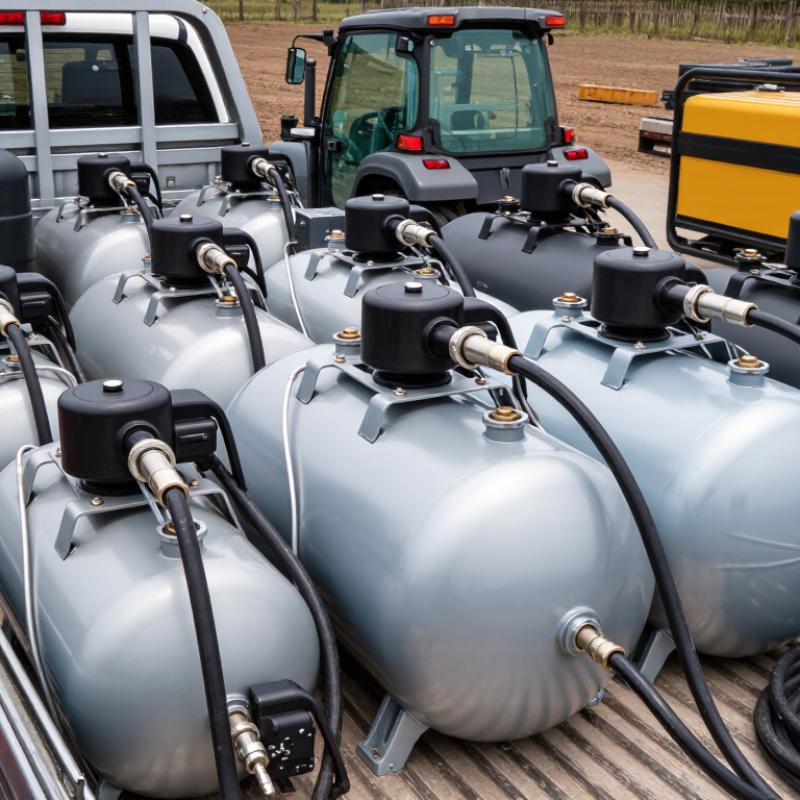
Diesel Transfer Tanks With Pumps: Design, Purpose, and Main Types
A diesel transfer tank stores fuel on a vehicle or worksite and moves it through a pump, hose, and nozzle. The tank’s shape affects where it fits, how securely it mounts, and how much cargo space remains. Common features include a vent, fill opening, pump connection, and internal baffles that reduce fuel movement. That sounds basic. But small details matter.
Rectangular tanks offer straightforward storage, while L-shaped designs can sit around equipment or vehicle-bed features. Low-profile models help preserve visibility and clearance. Toolbox-combination tanks add storage, though their shape may limit usable fuel capacity. Portable units suit smaller jobs, but lifting a full tank can be awkward. Not always convenient.
Pump systems vary too. Many use a 12-volt connection; others rely on manual pumping. Check that the pump, seals, hose, and nozzle are specified for diesel, and consider a filter and accessible shutoff. A high flow rate sounds appealing, yet it may be less useful than a controllable nozzle for filling smaller equipment. Tank material, mounting points, and stated capacity deserve equal attention. A tank that fits on paper may obstruct tools or feel unbalanced once loaded. Measure the available space, review the installation instructions, and verify fuel-handling requirements for the intended setting. I would not assume one design suits every truck or job.
Top 10 Best Diesel Transfer Tanks With Pumps to Buy
Diesel Transfer Tanks With Pumps: Design, Purpose, and Main Types
| Rank | Tank and pump configuration | Typical capacity | Common pump setup | Best suited for | Design notes |
|---|---|---|---|---|---|
| 1 | Low-profile aluminum transfer tank | About 30–100 gal | 12 V DC, commonly about 10–15 GPM | Pickup trucks where bed visibility and clearance matter | Lightweight construction and a lower profile; check bed dimensions and payload capacity. |
| 2 | L-shaped aluminum tank with toolbox | About 50–100 gal | 12 V DC, commonly about 10–15 GPM | Work trucks needing fuel storage and lockable tool space | The raised toolbox section uses space above the tank; confirm compatibility with the truck bed and cover. |
| 3 | Rectangular steel transfer tank | About 50–100 gal | 12 V DC, commonly about 10–15 GPM | Frequent jobsite refueling and utility-vehicle use | Typically heavier than aluminum; inspect the coating and maintain it to help prevent corrosion. |
| 4 | Compact portable tank with 12 V pump | About 10–30 gal | 12 V DC, often about 5–10 GPM | Small equipment, generators, and occasional refueling | Smaller capacity can be easier to handle, but a full tank is still heavy and must be securely restrained. |
| 5 | High-capacity rectangular tank with 12 V pump | About 100–150 gal | 12 V DC, commonly about 15–20 GPM | Fleets and equipment requiring fewer refueling trips | Requires careful payload and axle-load calculations; verify tank dimensions before purchase. |
| 6 | 12 V pump kit with automatic nozzle | Tank-dependent, commonly 30–100 gal | 12 V DC, commonly about 10–15 GPM | Users who want a familiar, straightforward fueling setup | Check hose length, nozzle shutoff function, filtration, and whether the pump is rated for diesel. |
| 7 | AC-powered stationary transfer tank | About 100 gal and up | AC pump; flow varies by pump and installation | Workshops, depots, and fixed fueling points with suitable power | Not intended for vehicle-bed use unless specifically designed and approved for that application. |
| 8 | Gravity-feed tank with shutoff valve | About 10–50 gal | No powered pump; gravity flow varies with height and hose size | Simple, low-complexity transfer where gravity feed is suitable | Requires a suitable height difference and compatible equipment; use a positive shutoff and monitor filling. |
| 9 | Transfer tank with meter and filtration | About 30–100 gal | Usually 12 V DC, commonly about 10–15 GPM | Operations that track dispensing or prioritize fuel cleanliness | Confirm meter accuracy and filter micron rating; replace filters according to the maker’s instructions. |
| 10 | Auxiliary-style tank with transfer pump | About 30–60 gal | 12 V DC, commonly about 5–15 GPM | Drivers seeking additional diesel capacity for compatible equipment or vehicles | Auxiliary fuel storage and direct vehicle connection are different applications; use only a system designed for the intended connection. |
Capacity and flow figures are approximate ranges for common configurations, not guaranteed specifications. Actual capacity, pump output, materials, and included accessories vary by model. Before buying or transporting fuel, verify vehicle payload limits, installation instructions, local fire and transport rules, and any required tank approvals. Use equipment specifically rated for diesel and never leave fueling unattended.
Related Posts
-
How to Choose the Right Fuel Transfer Tank with Pump for Your Needs
-
Why Choose a Diesel Tank With Pump for Fuel Storage?
-
Maximizing Efficiency and Safety with Diesel Transfer Tanks Featuring Pumps in the Fuel Industry
-
Top 5 Diesel Transfer Tanks with Pump for Efficient Fuel Management
-
Top 10 Air Diaphragm Pumps in China for Efficient Fluid Transfer?
-
Top 5 Tips for Choosing an Industrial Vacuum Pump?

