


What Is the Best Clear Acrylic Resin for Global Buyers?
Choosing the best Clear Acrylic Resin for global buyers requires more than comparing price and transparency. Resin performance depends on the intended application, processing method, climate, and required finish. A material for decorative casting may not suit optical components, protective coatings, or industrial prototypes. The difference often appears after curing, when bubbles, yellowing, brittleness, or surface tack become visible.
In practical sourcing, experienced buyers examine viscosity, curing time, hardness, shrinkage, UV resistance, and color stability. They also request technical data sheets, safety data sheets, batch information, and samples before placing large orders. Supplier consistency matters. A clear resin that performs well in one shipment should produce similar results in the next. That expectation needs evidence, not promises.
Small tests reveal important weaknesses.
Global purchasing adds further concerns. Buyers should review packaging quality, moisture protection, labeling, export documentation, and communication reliability. Regional standards may also influence product selection, especially for consumer goods, construction materials, or sensitive applications. Independent testing can confirm transparency, adhesion, mechanical strength, and long-term aging behavior. No single formula is perfect for every market. Even attractive laboratory results may change under heat, sunlight, humidity, or poor mixing conditions. This is where careful comparison becomes valuable. The best Clear Acrylic Resin is therefore the one that matches the application, remains consistent across batches, and comes with credible technical support. A thoughtful decision may take longer, but it can reduce waste, complaints, and costly replacement orders.
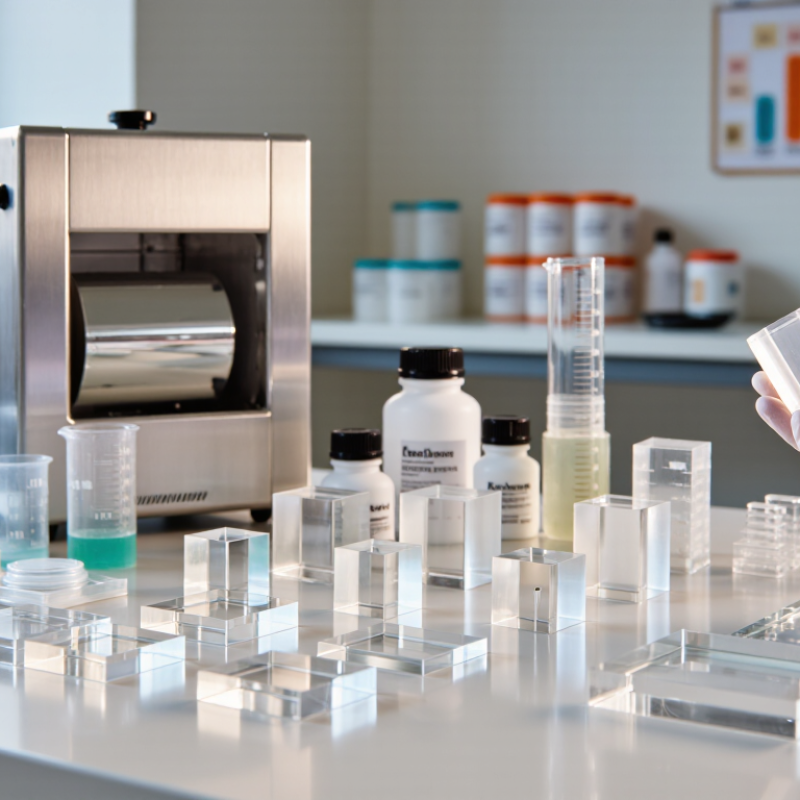
What Is Clear Acrylic Resin and How Is It Used?
Clear acrylic resin is a transparent polymer material, commonly based on polymethyl methacrylate or related methacrylate chemistry. It begins as pellets, powder, or liquid syrup, depending on the manufacturing process. After curing or heating, it forms a rigid, glass-like surface with useful optical clarity.
It is used in protective coatings, display parts, lighting components, dental materials, decorative castings, and industrial panels. Clear grades transmit light well and resist weathering better than many ordinary plastics. However, clarity can decline after poor mixing, moisture exposure, or excessive curing heat. Small bubbles often reveal weak processing control.
Market data shows strong commercial demand. Grand View Research valued the global acrylic resins market at about 19.94 billion US dollars in 2023. Its report forecasts approximately 5.6% compound annual growth from 2024 to 2030. Fortune Business Insights also projects continued expansion, although its figures differ because it uses a different market scope. No resin is perfect. I would compare viscosity, curing temperature, yellowing resistance, hardness, and safety documentation before purchasing. Global buyers should request a technical data sheet, batch information, and sample panels. A resin that looks excellent in a small laboratory sample may behave differently in humid factories, thick castings, or outdoor exposure.
| Evaluation Dimension | Clear Acrylic Resin Information | Typical Data or Performance | Common Applications | Buyer Considerations |
|---|---|---|---|---|
| Material Definition | Clear acrylic resin is a transparent polymer material based mainly on acrylic or methacrylic monomers. Solid grades are commonly supplied as pellets, while liquid grades may be supplied as solutions, emulsions, or reactive systems. | Optical clarity depends on polymer purity, formulation, thickness, additives, and processing conditions. | Transparent sheets, molded parts, coatings, inks, adhesives, sealants, and decorative surfaces. | Confirm whether the required product is a thermoplastic resin, solvent-based resin, water-based resin, UV-curable resin, or two-component system. |
| Solid Acrylic Resin Type | Transparent thermoplastic acrylic resin, commonly based on polymethyl methacrylate or related acrylic copolymers. | Rigid, transparent, weather-resistant, and suitable for melt processing. | Optical components, displays, lighting covers, transparent housings, and signage. | Check melt flow, molding temperature, impact modification, color stability, and sheet or pellet form. |
| Liquid Acrylic Resin Type | Film-forming acrylic resin supplied in water-based, solvent-based, UV-curable, or reactive liquid formulations. | Viscosity, solids content, drying speed, and curing conditions vary significantly by formulation. | Clear coatings, wood finishes, metal coatings, automotive refinishing, inks, and industrial paints. | Compare viscosity, solid content, solvent compatibility, minimum film-forming temperature, curing method, and regulatory requirements. |
| Visible Light Transmission | High transparency is a major advantage of clear acrylic materials when the resin is properly processed. | Transparent PMMA sheet can transmit approximately 90% to 92% of visible light at around 3 mm thickness, depending on grade and surface quality. | Light diffusers, display covers, protective windows, lenses, and transparent panels. | Request measured transmission data at the intended thickness; haze and surface scratches can reduce apparent clarity. |
| Refractive Index | The refractive index affects optical design, reflection, and light transmission behavior. | Typical PMMA refractive index is approximately 1.49 at visible wavelengths. | Optical parts, light guides, lenses, illuminated signs, and transparent covers. | Match the refractive index with the optical design and verify the test wavelength used in the technical data sheet. |
| Density | Acrylic resin is lighter than glass while maintaining good transparency and rigidity. | Typical PMMA density is approximately 1.17 to 1.20 g/cm³. | Lightweight glazing, transport components, displays, packaging components, and equipment covers. | Use density together with thickness, stiffness, impact resistance, and total part weight when comparing materials. |
| Glass Transition Temperature | The glass transition temperature indicates when an amorphous acrylic material changes from a rigid glassy state toward a softer state. | Typical PMMA glass transition temperature is approximately 85°C to 105°C, depending on molecular structure and grade. | Indoor molded parts, transparent housings, signs, and moderate-temperature coatings. | Do not treat the glass transition temperature as the continuous-use temperature; evaluate load, time, humidity, and heat exposure together. |
| Weather and UV Resistance | Acrylic materials generally provide strong resistance to sunlight and outdoor weathering compared with many common transparent plastics. | Good outdoor color retention and transparency are possible when the grade and formulation are designed for exterior exposure. | Outdoor signage, lighting covers, architectural panels, vehicle parts, and protective coatings. | Ask for accelerated weathering results, UV stabilizer information, color-change limits, and the intended climate category. |
| Impact Resistance | Standard clear acrylic is rigid but can be more brittle than polycarbonate or impact-modified acrylic grades. | Impact performance varies widely with thickness, temperature, notch geometry, and formulation. | Displays, partitions, covers, signs, and non-safety-critical transparent components. | Choose an impact-modified grade or consider another transparent polymer when impact safety is the primary requirement. |
| Chemical Resistance | Acrylic has useful resistance to water and many dilute chemicals, but it can be attacked by some organic solvents. | Alcohols, ketones, aromatic solvents, chlorinated solvents, and some strong cleaning chemicals may cause crazing, swelling, or dissolution. | General-purpose coatings, displays, housings, and decorative surfaces. | Conduct compatibility testing with the actual cleaner, disinfectant, adhesive, ink, or service chemical before approval. |
| Water Absorption | Acrylic absorbs a small amount of moisture, which may influence dimensions, appearance, and processing. | Typical 24-hour water absorption for PMMA is approximately 0.3% to 0.4%, depending on the test method and grade. | Indoor and outdoor transparent parts where moderate moisture resistance is acceptable. | Control drying before molding and evaluate dimensional tolerances in high-humidity applications. |
| Surface Hardness | Acrylic generally offers a harder surface than many flexible transparent plastics, but it can still be scratched by abrasive materials. | Surface performance depends on grade, coating, polishing, and handling conditions. | Display panels, transparent covers, signage, decorative parts, and interior fittings. | Consider a hard coat, protective film, anti-scratch treatment, or cleaning procedure when frequent contact is expected. |
| Processing Method | Solid acrylic grades can be processed by injection molding, extrusion, thermoforming, machining, and polishing. Liquid grades are applied by spraying, brushing, dipping, rolling, or printing. | Processing windows depend on molecular weight, viscosity, moisture level, equipment, and curing system. | Custom molded parts, sheets, films, coated panels, printed surfaces, and cast components. | Request recommended drying conditions, melt temperature, mold temperature, curing schedule, and compatible equipment settings. |
| Optical Appearance | A high-quality clear resin should provide low haze, uniform color, and minimal bubbles, gels, particles, or surface defects. | Appearance is affected by filtration, cleanliness, mixing, drying, molding, film thickness, and curing. | Premium coatings, optical parts, transparent packaging, lighting products, and visible consumer components. | Define acceptance limits for haze, yellowness index, color, bubbles, black specks, and surface defects before purchasing. |
| Best Choice for Transparent Molded Parts | Optical-grade or high-clarity thermoplastic acrylic with controlled melt flow and low impurity content. | Prioritizes transparency, dimensional stability, surface finish, and predictable molding behavior. | Lenses, light pipes, transparent covers, displays, and precision housings. | Check molding shrinkage, weld-line appearance, annealing requirements, and optical testing at the final part thickness. |
| Best Choice for Clear Coatings | Water-based, solvent-based, or UV-curable acrylic resin selected according to substrate and curing process. | Key variables include solids content, viscosity, hardness, flexibility, adhesion, gloss, and drying or curing speed. | Wood, metal, plastic, paper, automotive, industrial, and decorative coatings. | Select the formulation based on substrate adhesion, application equipment, VOC limits, pot life, recoatability, and final-use environment. |
| Global Purchasing Requirements | International buyers normally need consistent technical documentation and stable batch-to-batch quality. | Important documents may include a technical data sheet, safety data sheet, certificate of analysis, specification sheet, and regulatory statement. | Cross-border manufacturing, contract production, distribution, and multi-site procurement. | Confirm packaging, shelf life, lot traceability, delivery terms, customs classification, language requirements, and sample approval procedures. |
| Recommended Selection Rule | The best clear acrylic resin is the one that meets the required optical, mechanical, chemical, processing, environmental, and regulatory conditions. | No single acrylic grade is optimal for every application. | All clear resin purchasing projects. | Compare representative samples under real processing and service conditions instead of selecting only by price or visual clarity. |

